• Longyear Gallery
    785 Main St. Margaretville New York
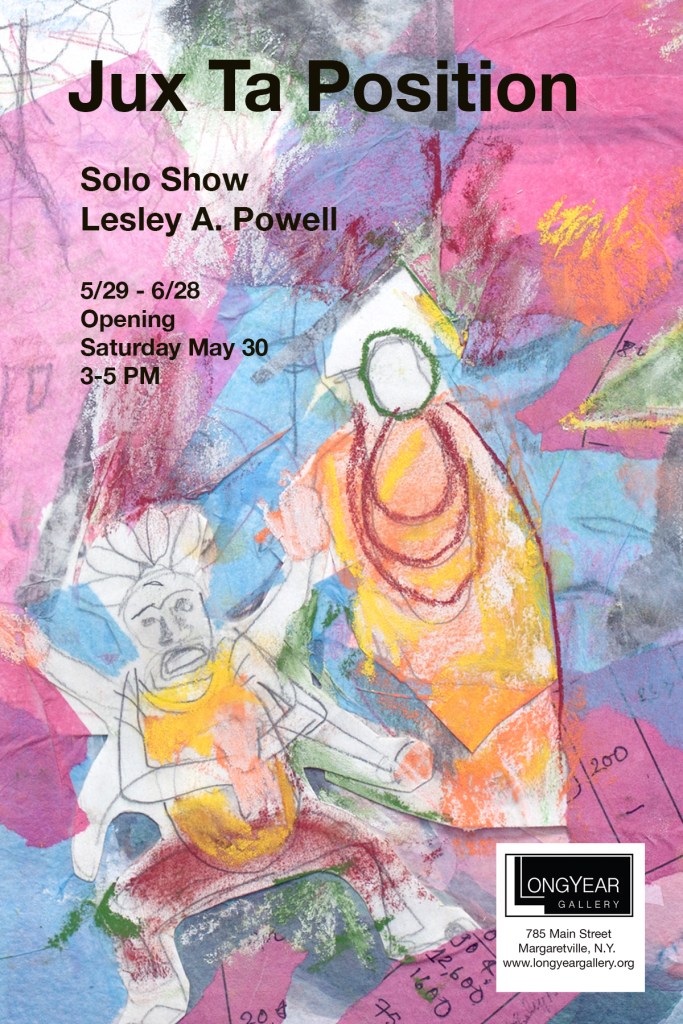
    May 29-6/28/26. Opening Saturday May 30 3 – 5 PM

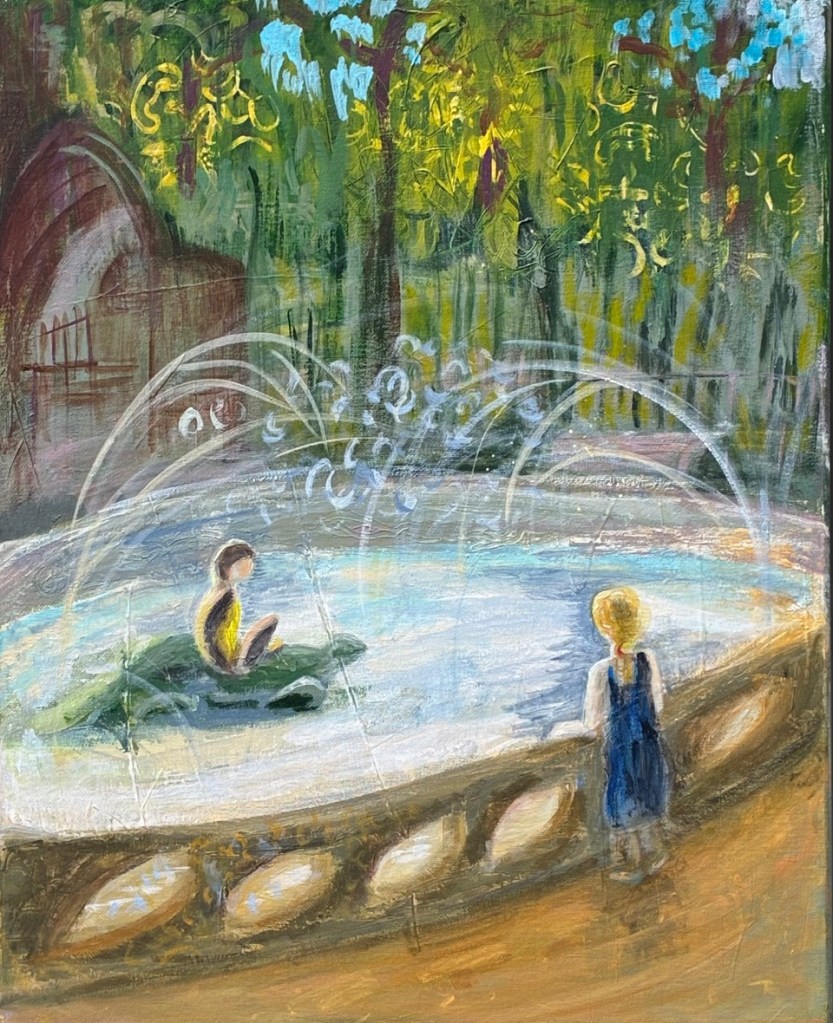
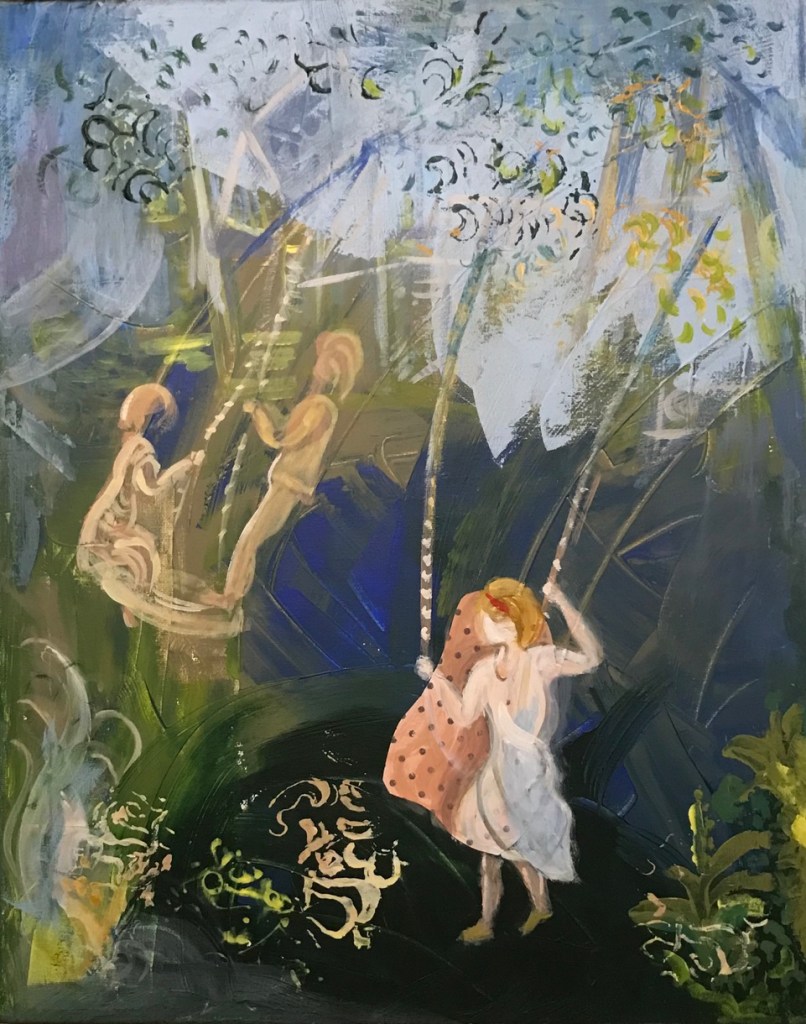
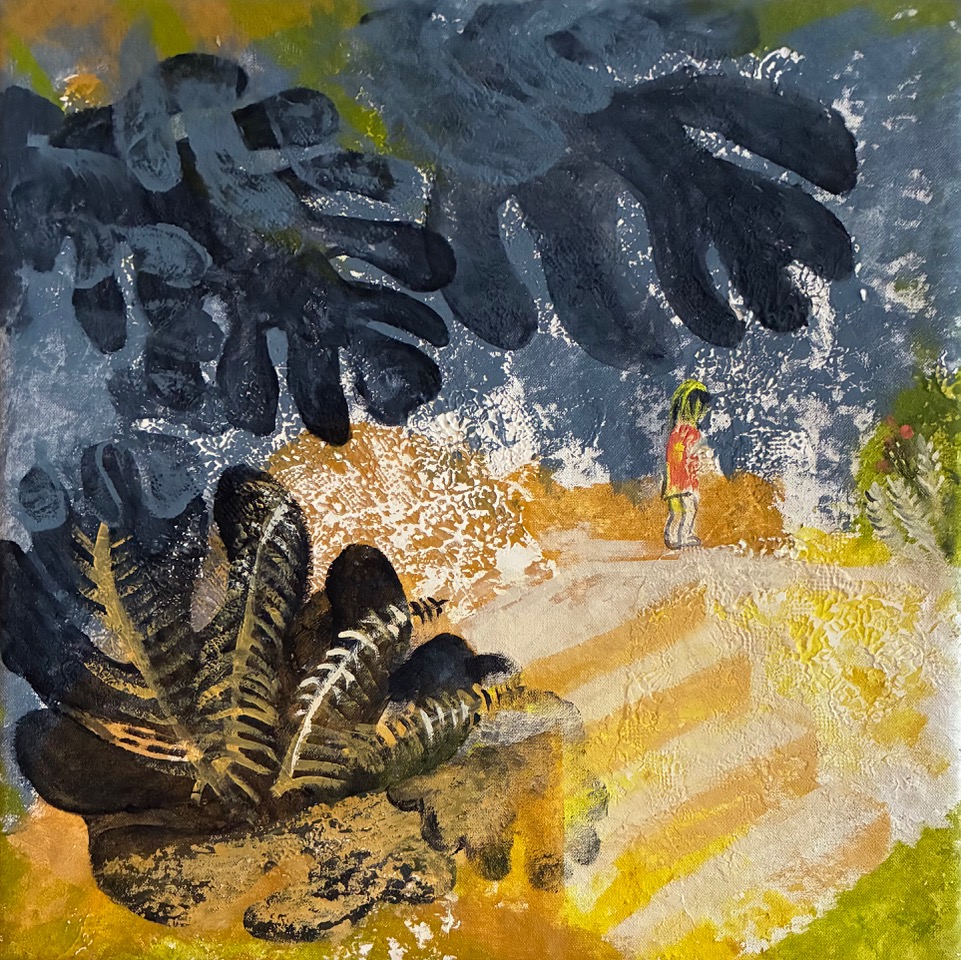
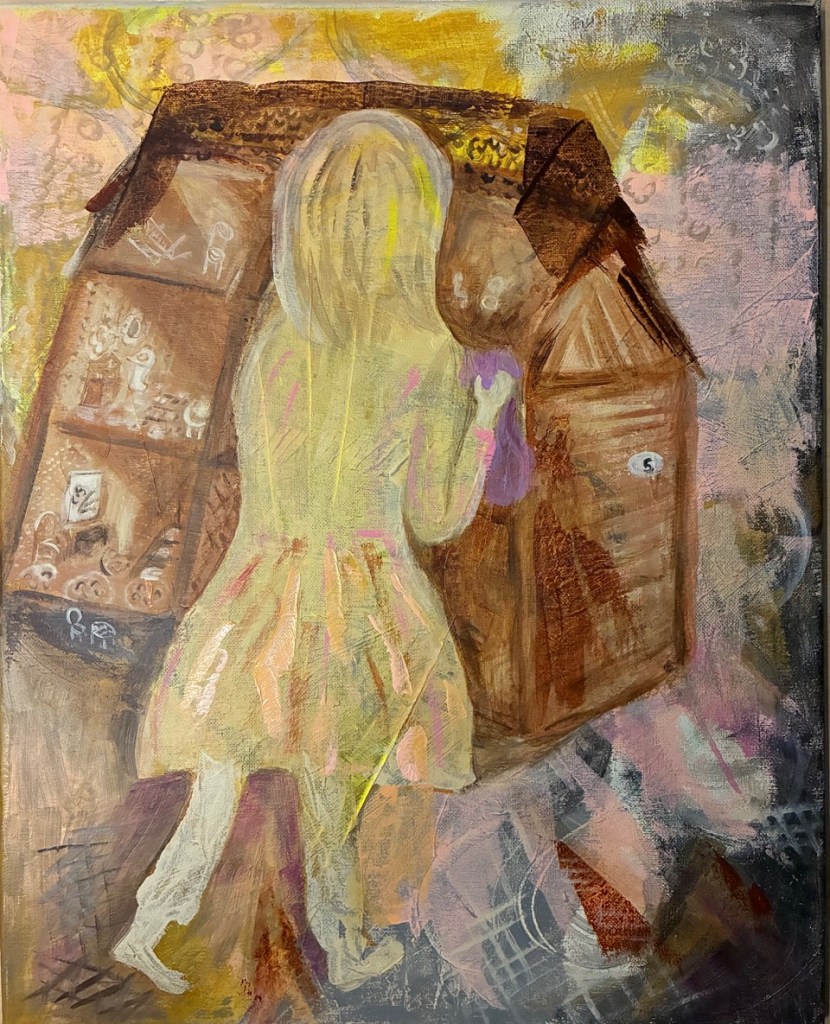
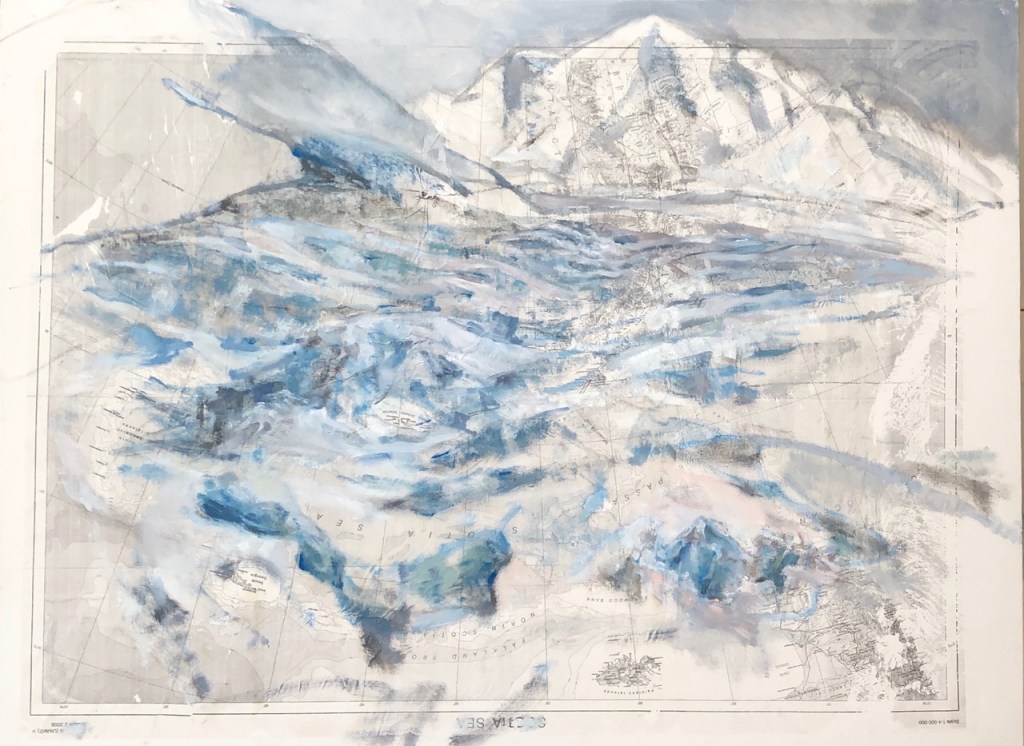
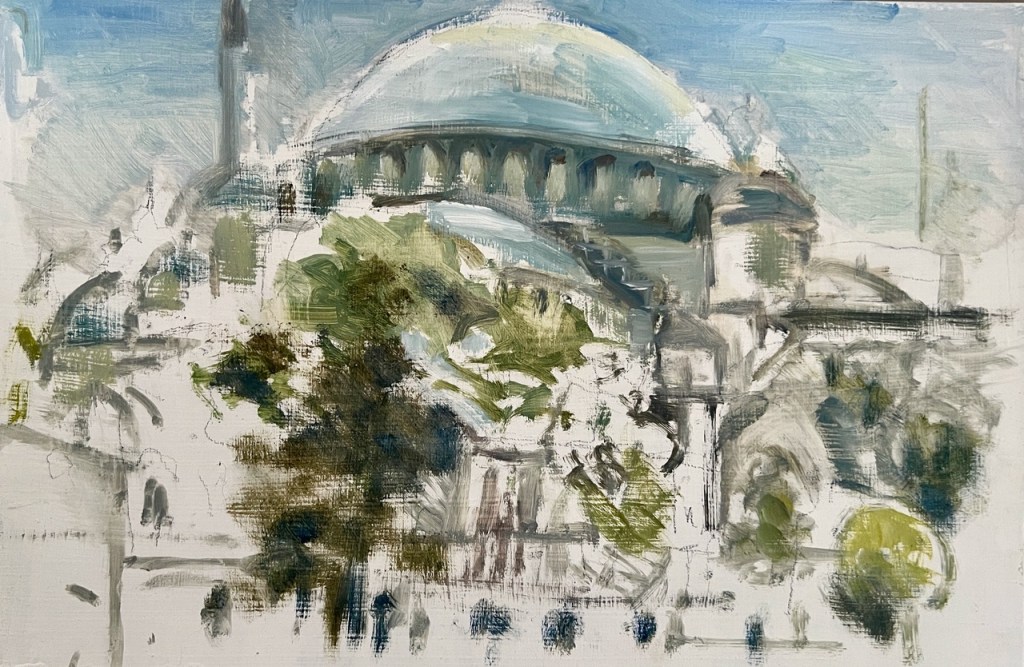
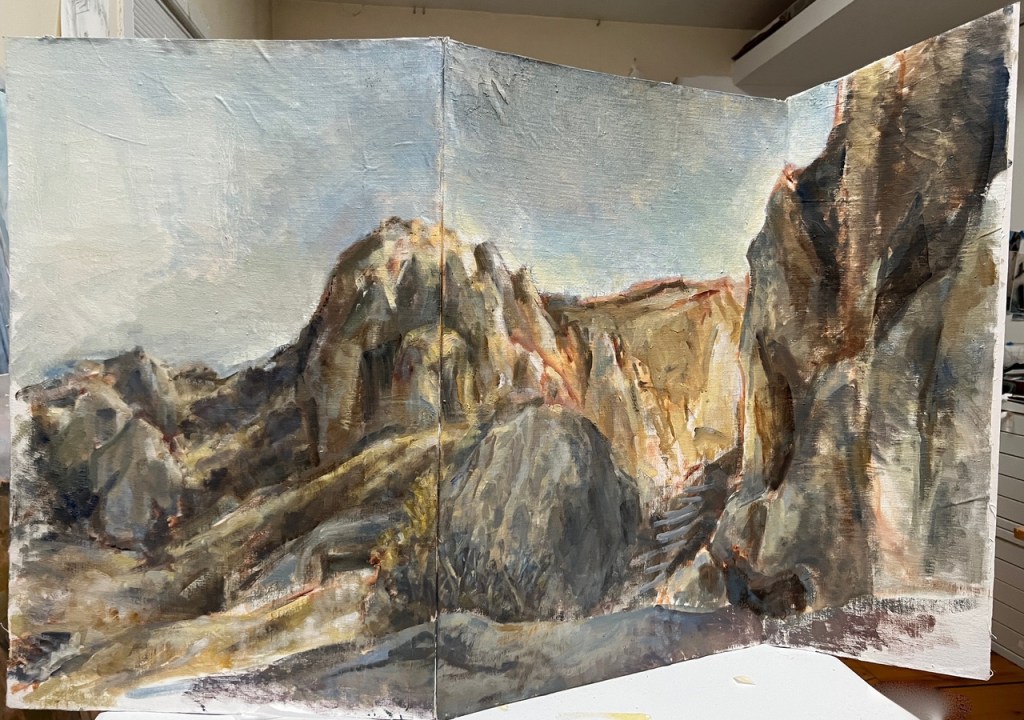
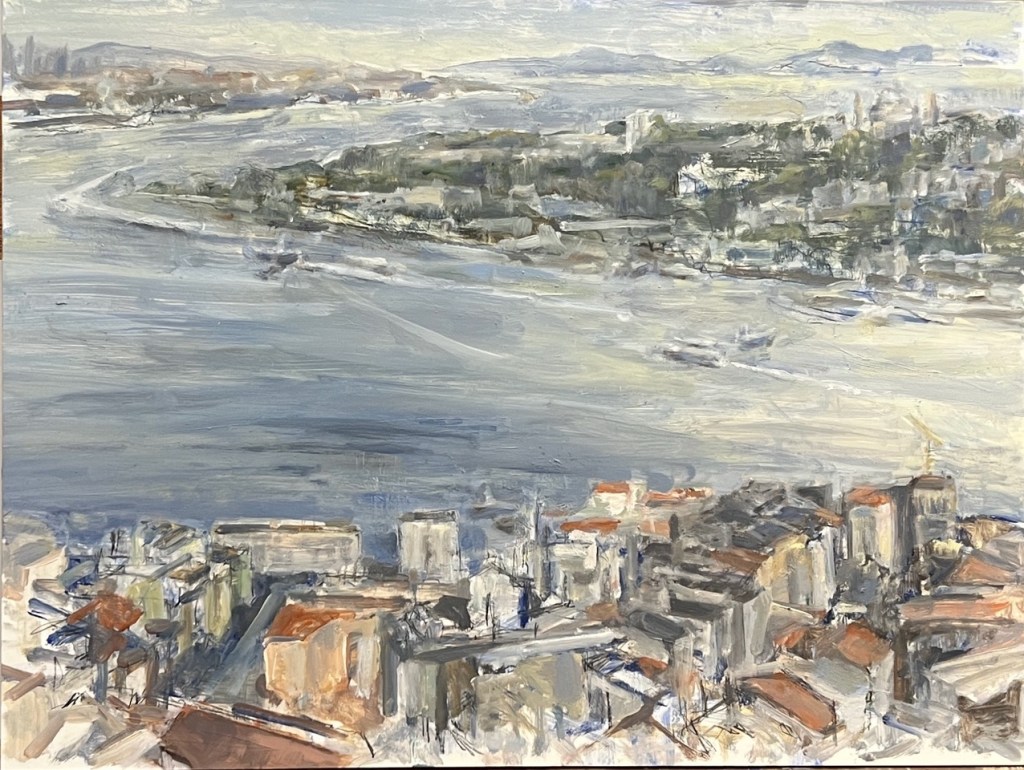
    My upcoming solo show continues with the figurative abstractions that have been a part of previous work. The large number of paintings (57), is a result of my having retired a few years ago, allowing more time for painting ,exploring new color and, hopefully, being more critical of those finished images.

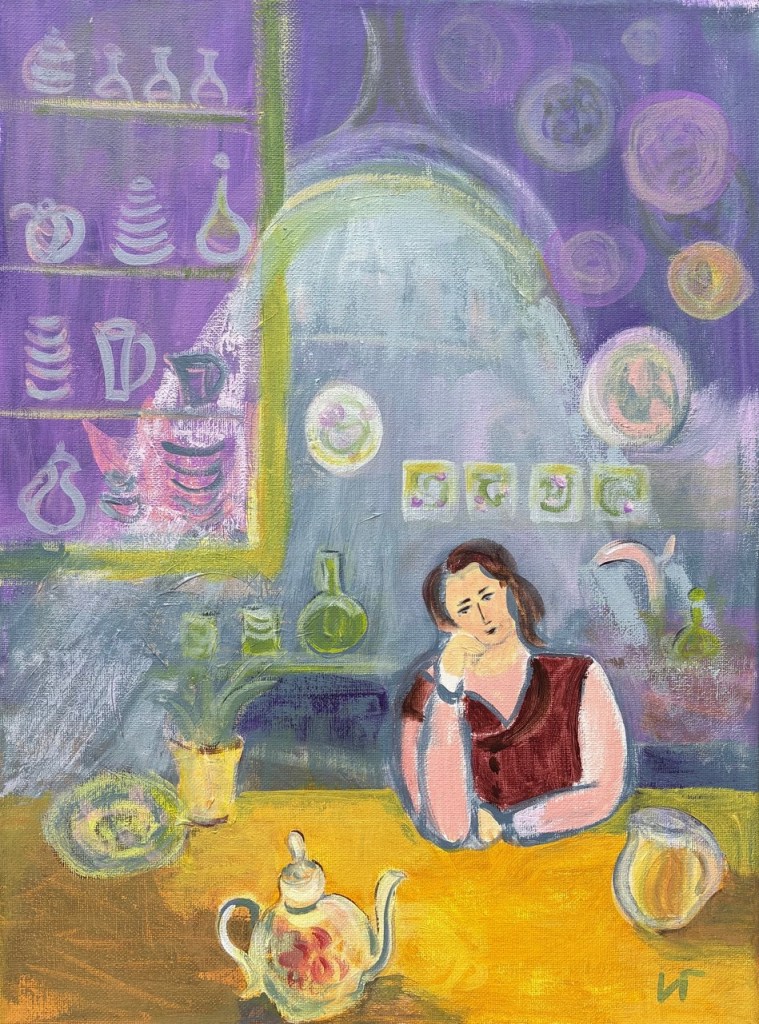
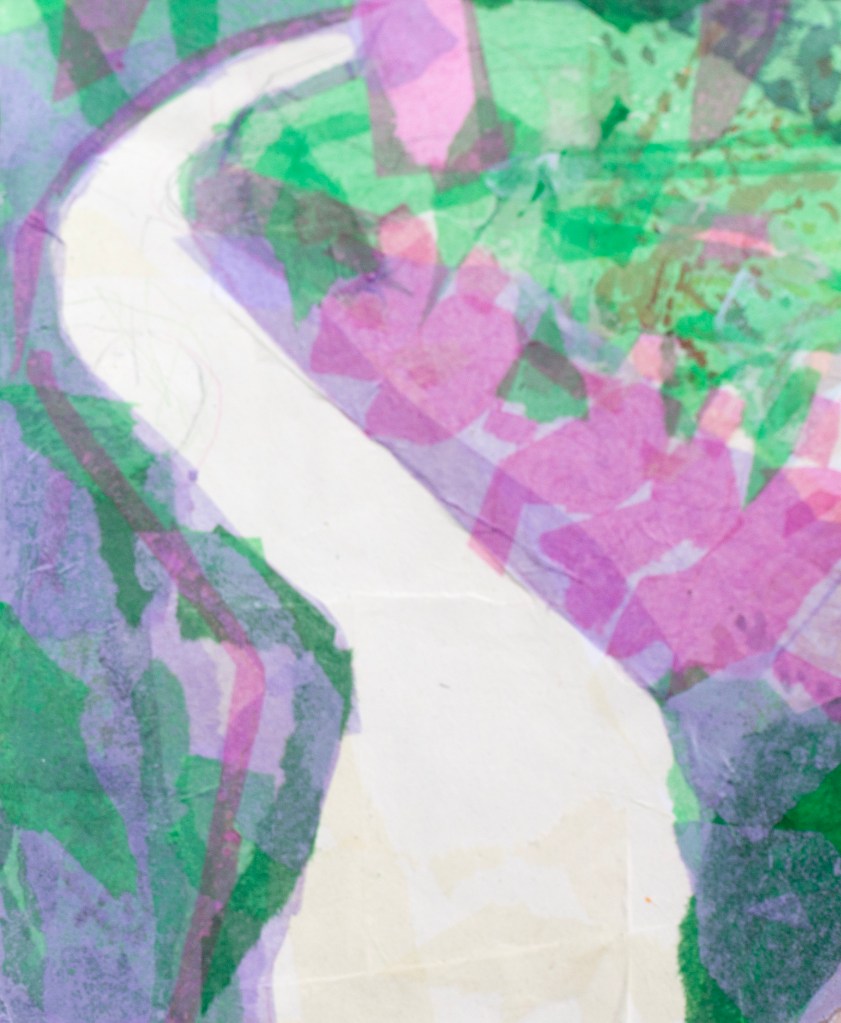
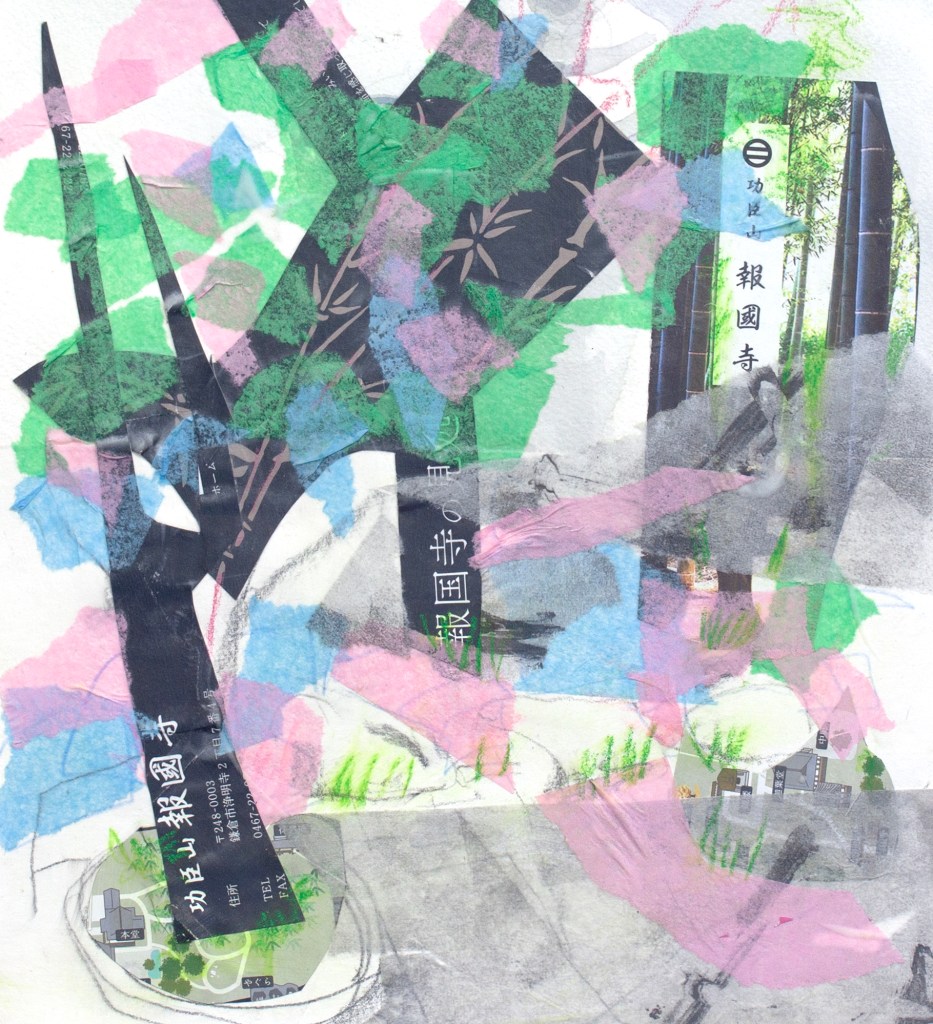
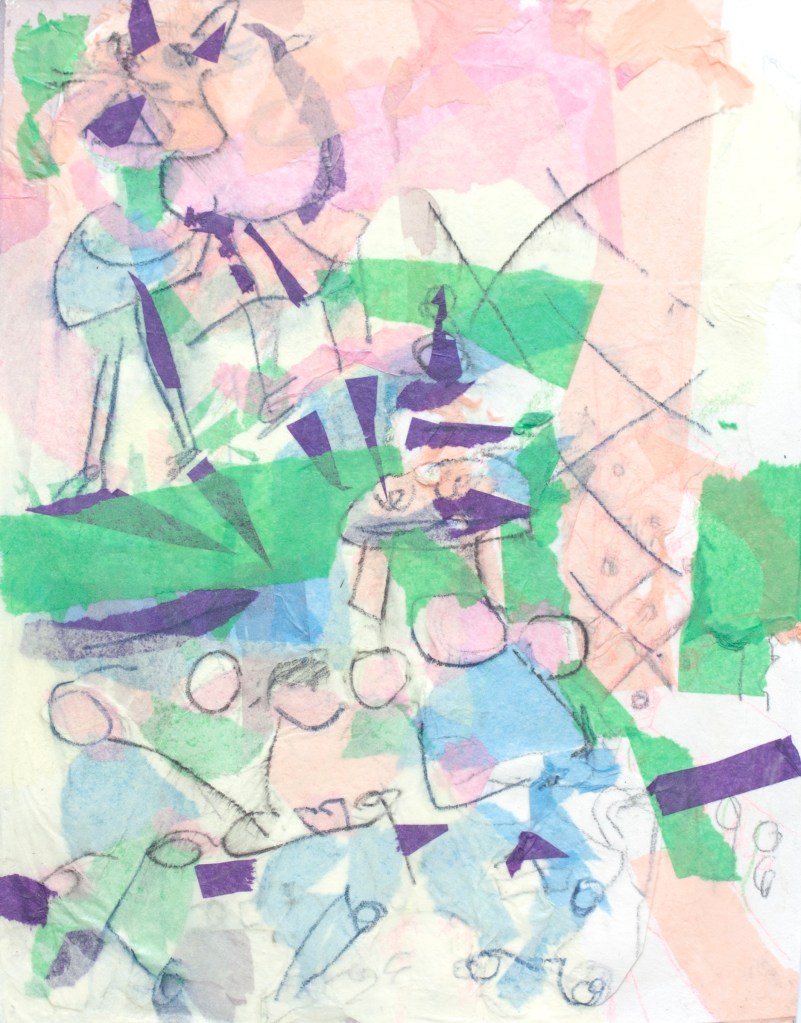
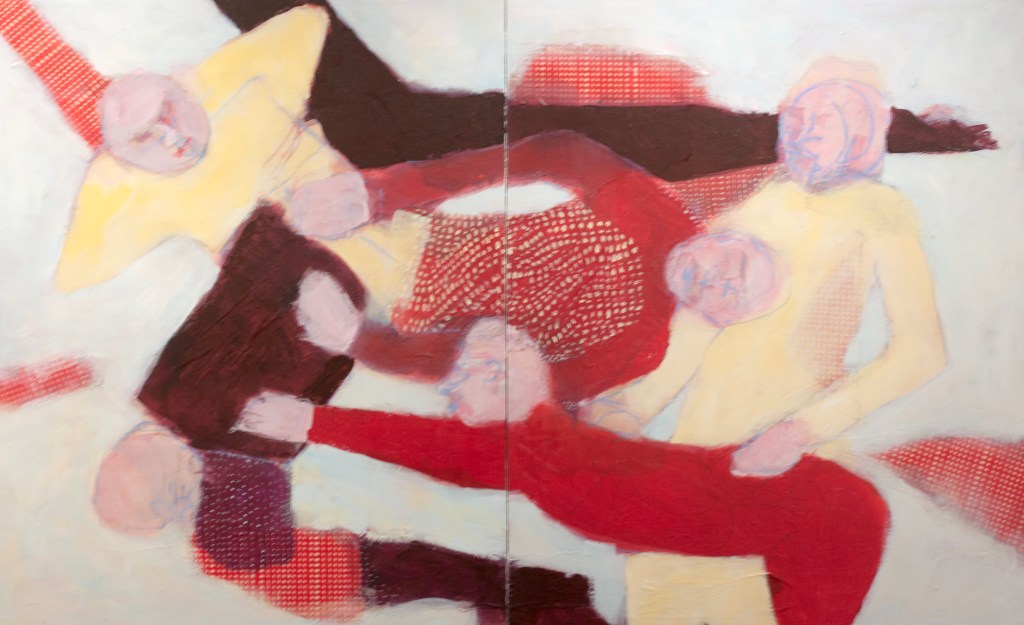
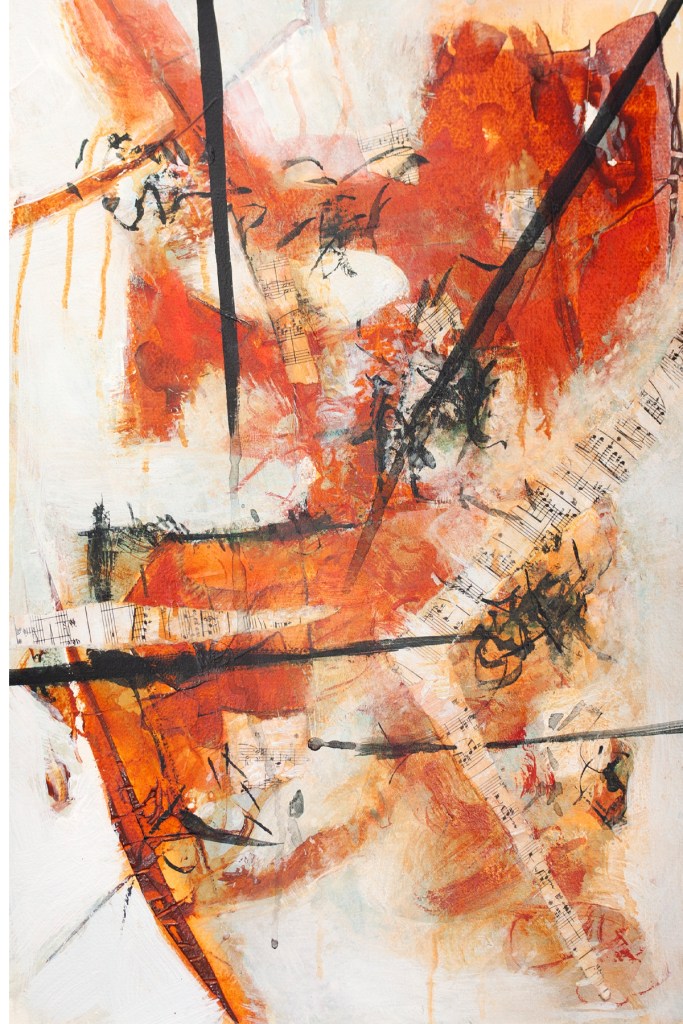
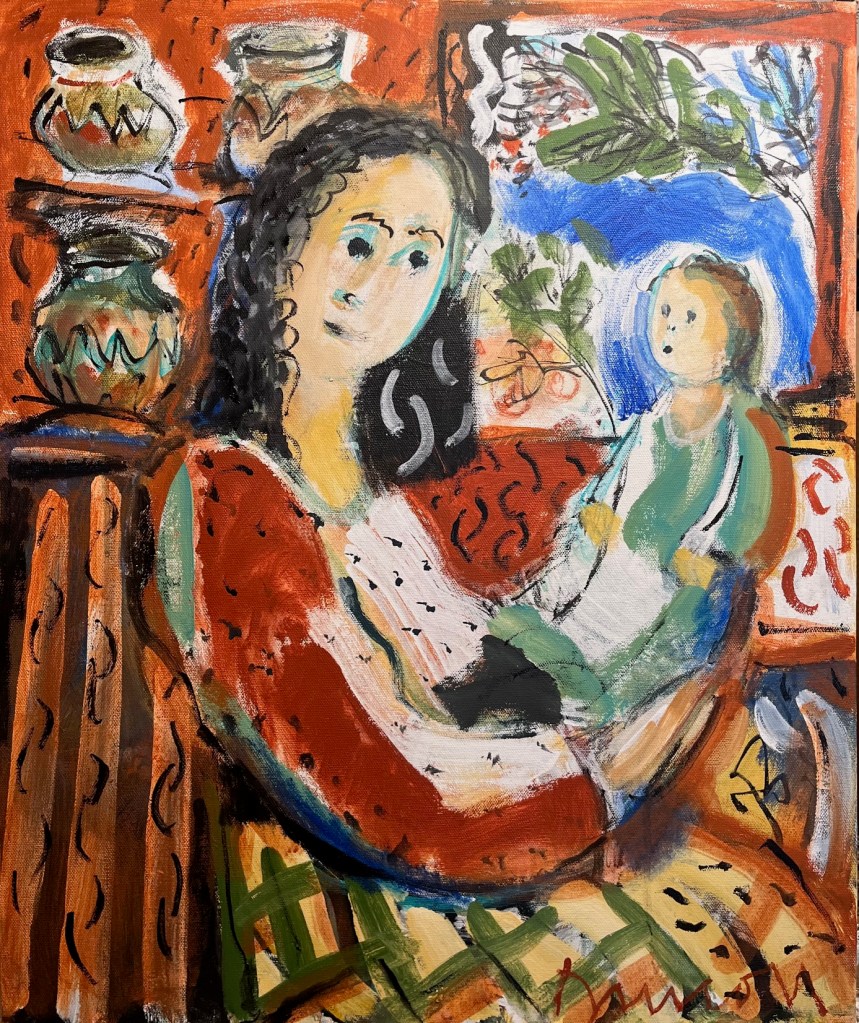
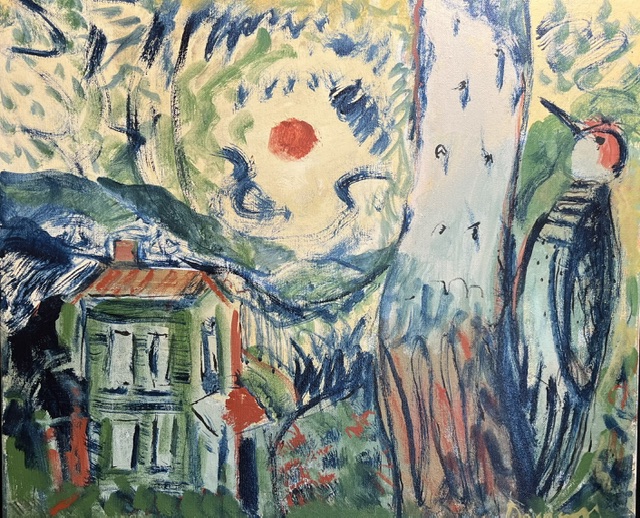
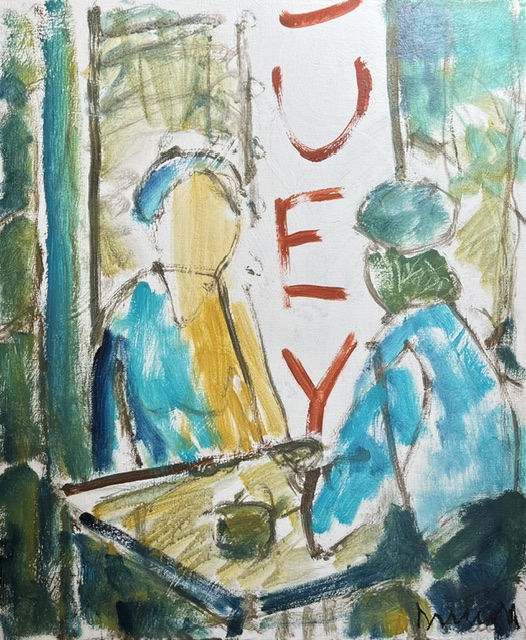
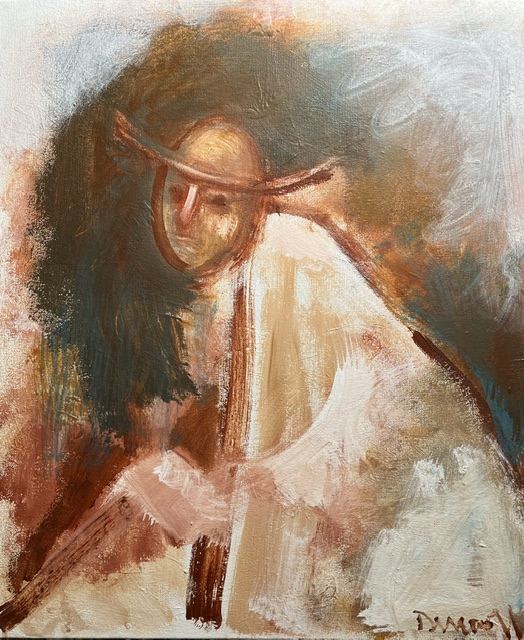
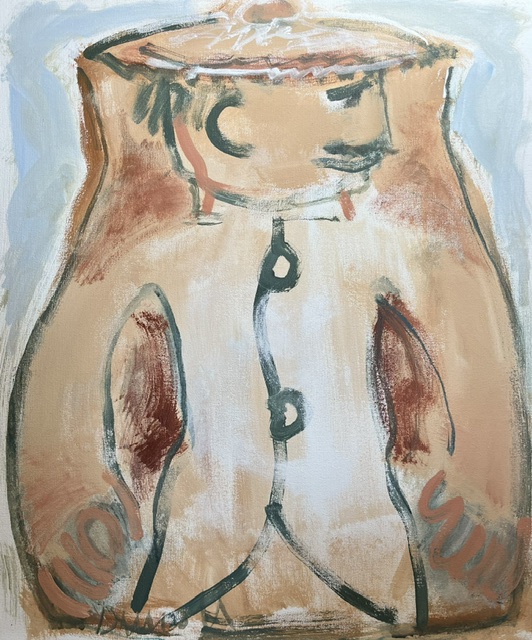
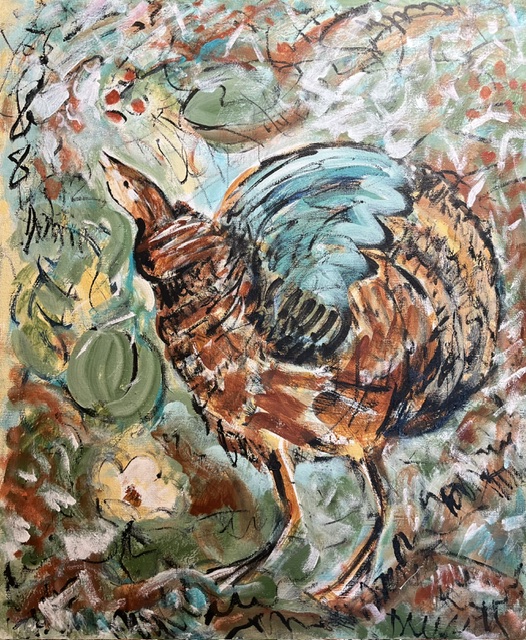
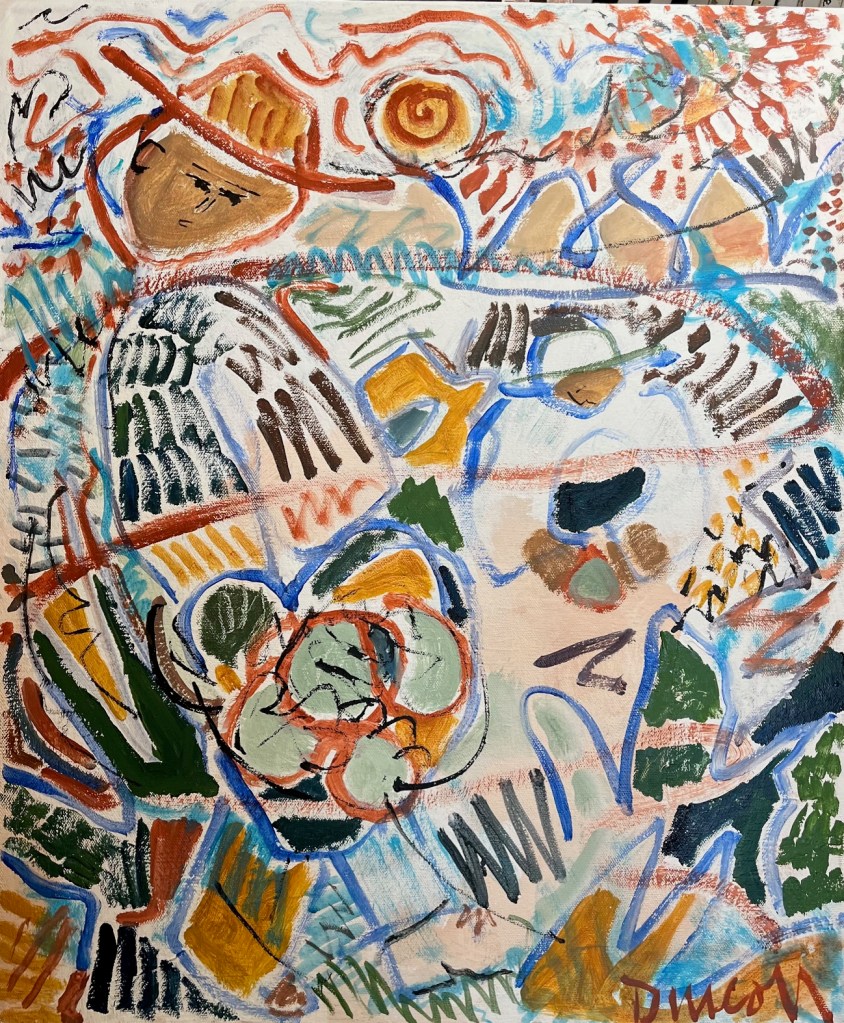
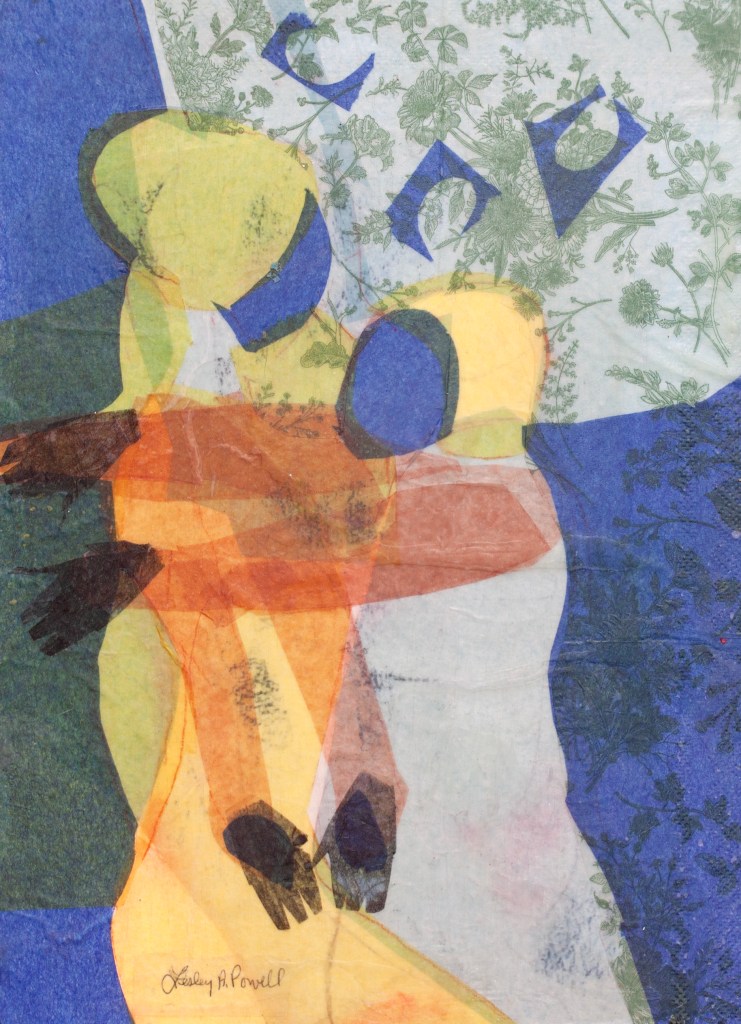
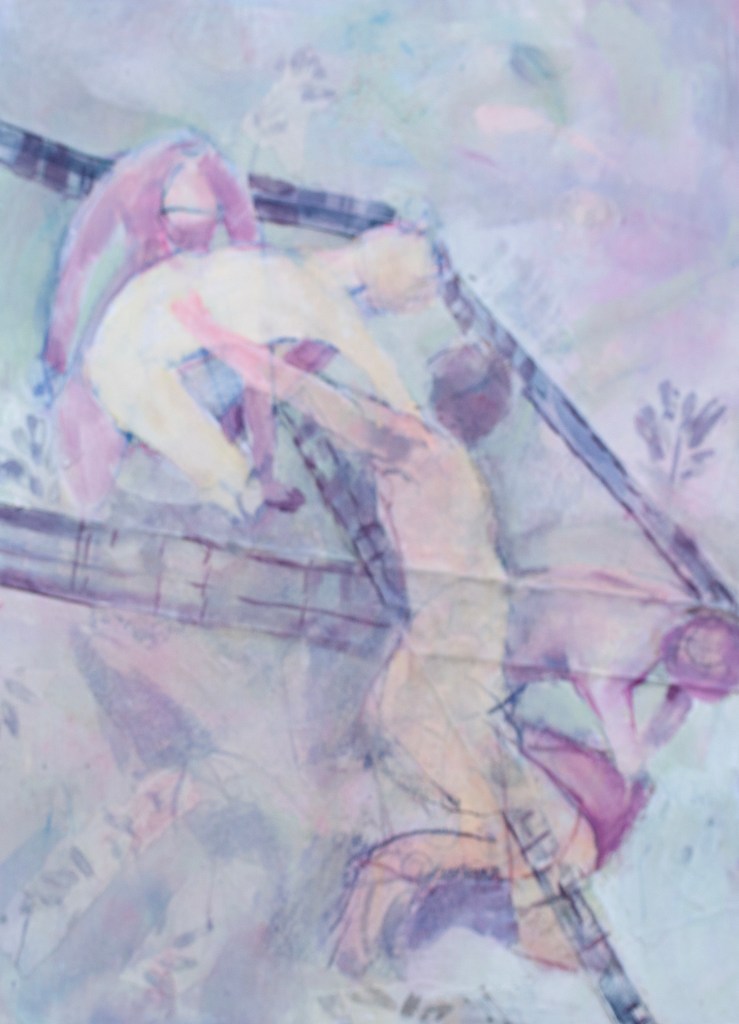
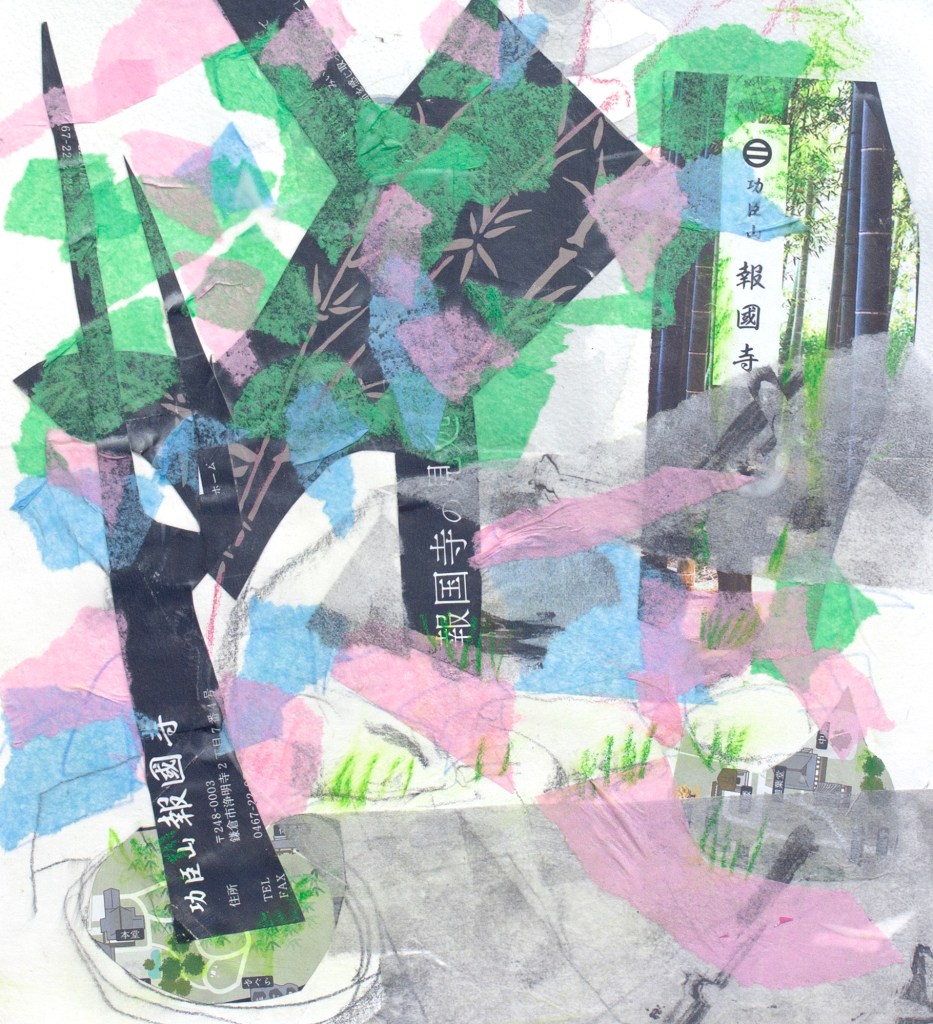
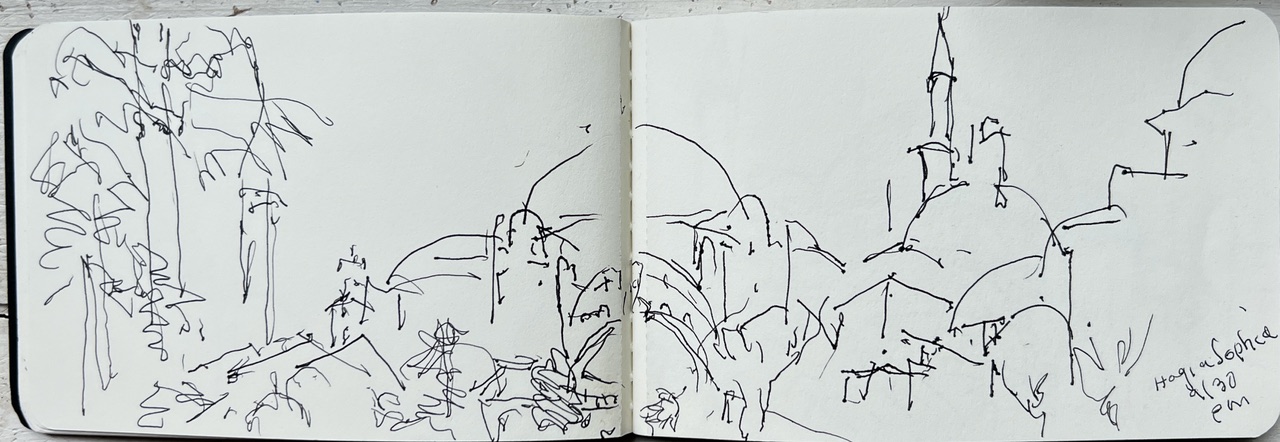
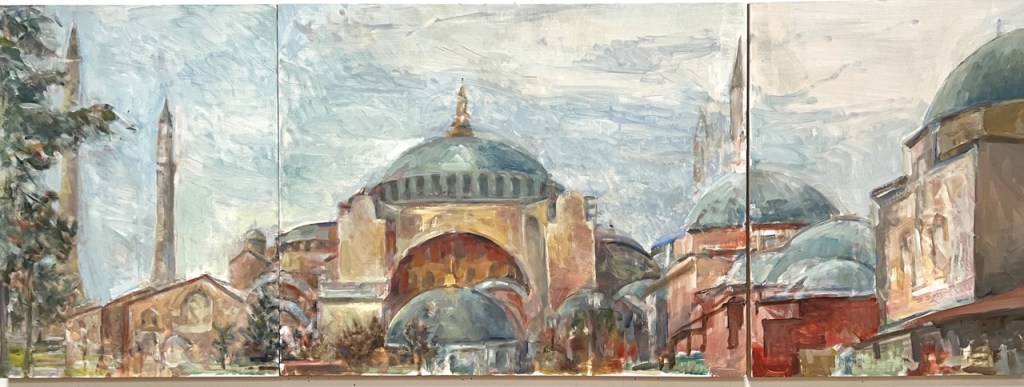
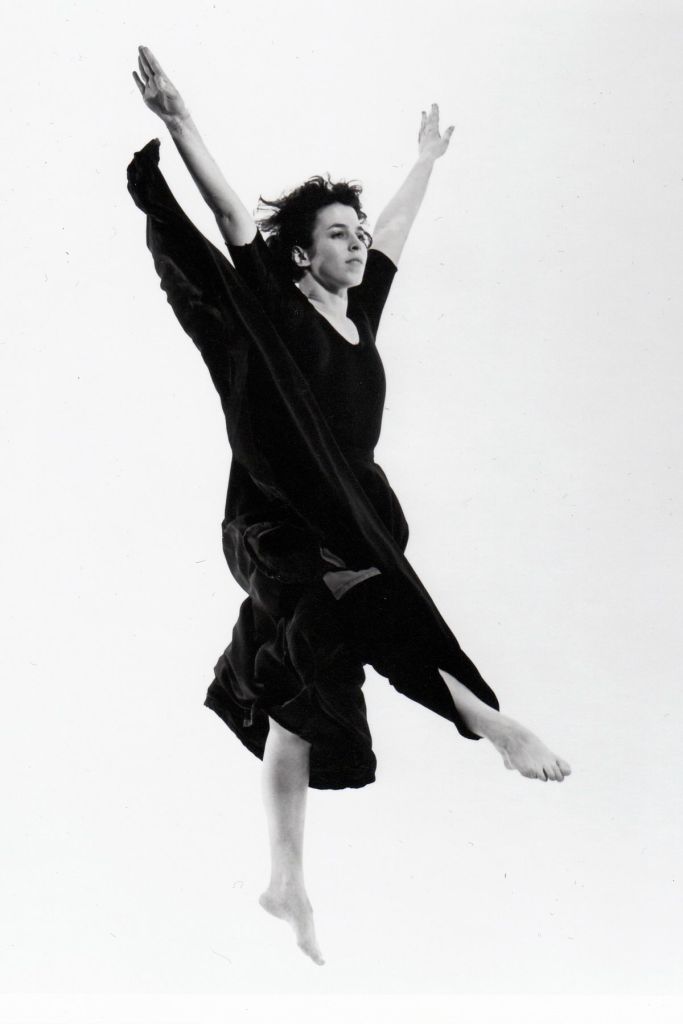
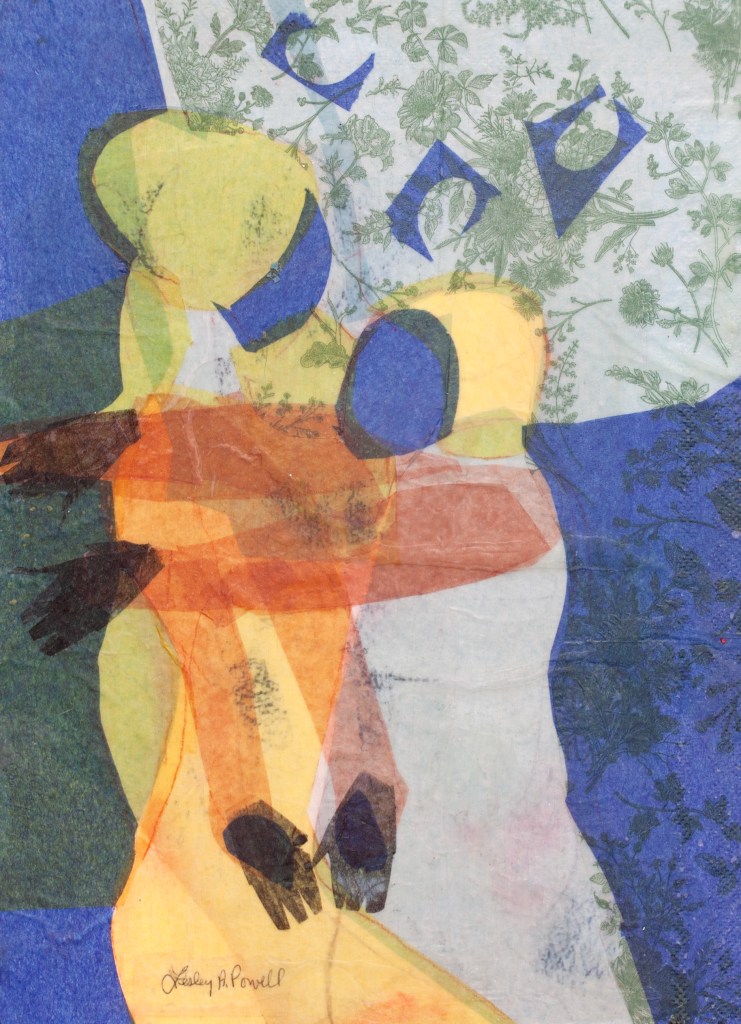
  • Jux Ta Positions explores the Lesley A. Powell’s journey from choreography to canvas, where the spatial drama of figures on stage transforms into composed forms, images, and colors on paper and canvas.

    Powell’s background as a choreographer profoundly influences her artistic practice. Just as the placement of dancers and elements like costumes, lights, and sets create nonverbal narratives in a performance, her artwork articulates its own silent language. Rather than telling a linear story, the compositions open a space for layered emotional expression and poetic juxtapositions between figures, nature, and abstract forms.

    Longyear Gallery
    785 Main St. Margaretville New York
    May 29-6/28/26. Opening Saturday May 30 3 – 5 PM

  • by Lynn Woods

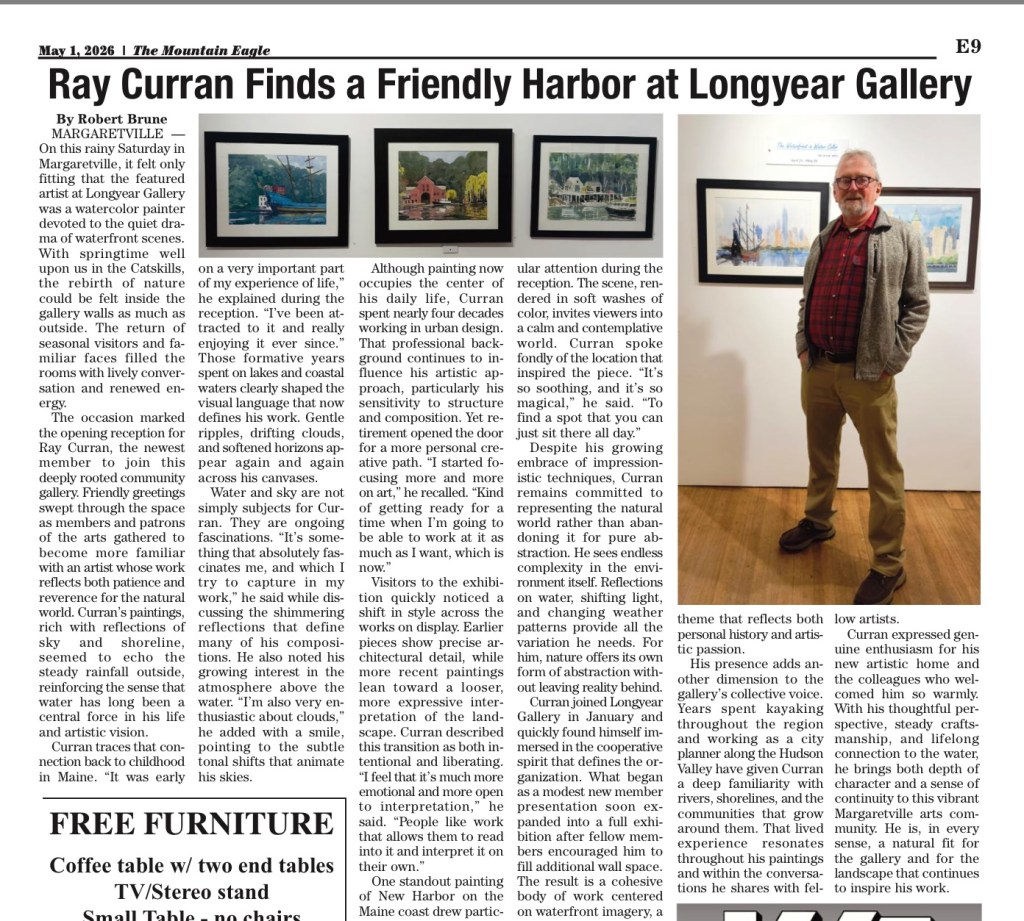
    Ray Curran’s ability to capture the qualities of light, atmosphere, and the lay of the land of a particular place through the fluidity and spontaneity of his chosen medium is beautifully on display in “The Waterfront in Watercolor,” which runs through May 24. Six of his 10 watercolors on display depict waterfront scenes along the Hudson River, part of a series that retraced Henry Hudson’s journey from Manhattan to Kingston, while the remaining four paintings are scenes from Monhegan Island, in Maine. Curran’s color harmonies tend to be subdued, consisting of skies in pale blue washes, forested hills in gray greens, and rocky shorelines and cliffs in warm grays. His brushwork has a sprightly spontaneity reminiscent of Maurice Prendergast.

    In some works, the neutral palette is enlivened with pops of color, such as the adobe red of the large brick building and the greenish yellows of the willow trees in “The Steelhouse”; the triangular shape of the building and the crisp, rectangular forms of the white and black tugboat in the foreground contrast pleasingly with the rounded forms of the vegetation and squiggly lines in the foreground depicting the reflections on the Rondout Creek.

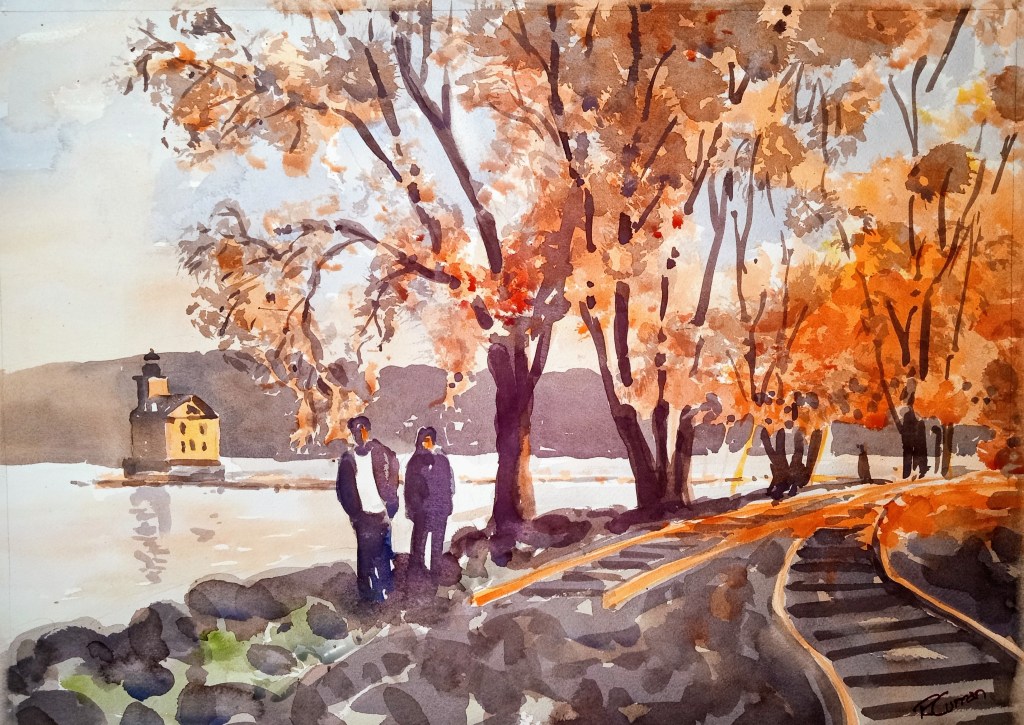
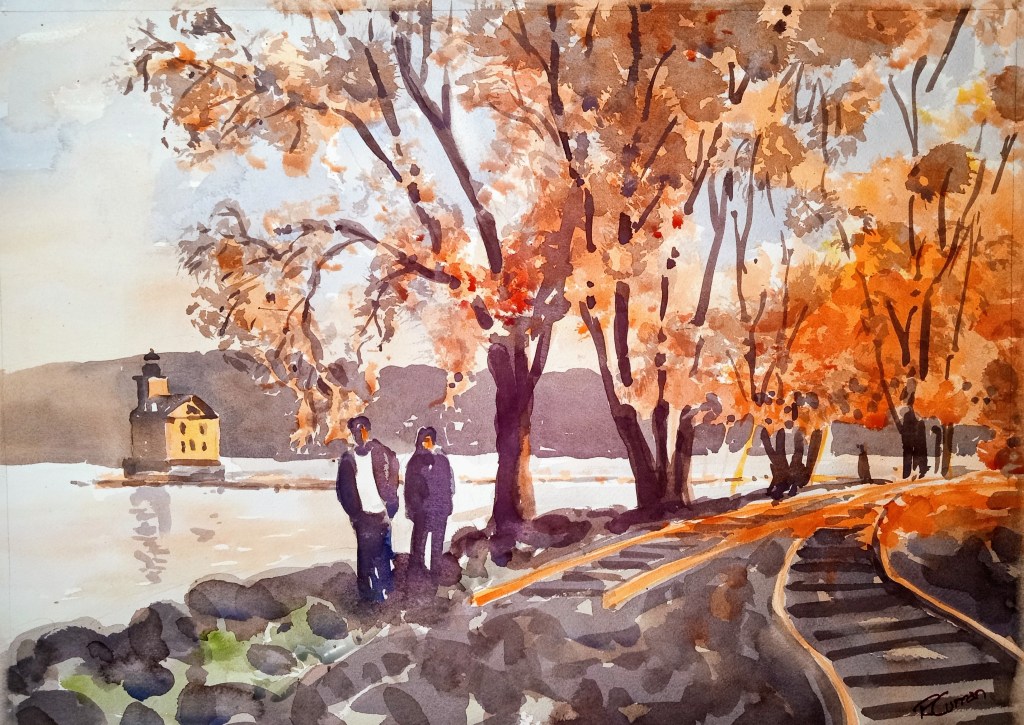
    Another standout is “Kingston Point,” in which the curving lines of the railroad tracks, set within the bottom dark triangular shape of the railroad bed extending from lower left to middle right, gains force with the rhythmic row of autumnal trees, which also progress to the right. The composition is anchored by the horizontal form of the ridge in the background, punctuated at left by the compact, geometrical form of the lighthouse. Two figures standing just to the left of center echo the verticals of the trees and help define the space, as well as lend a note of mystery.

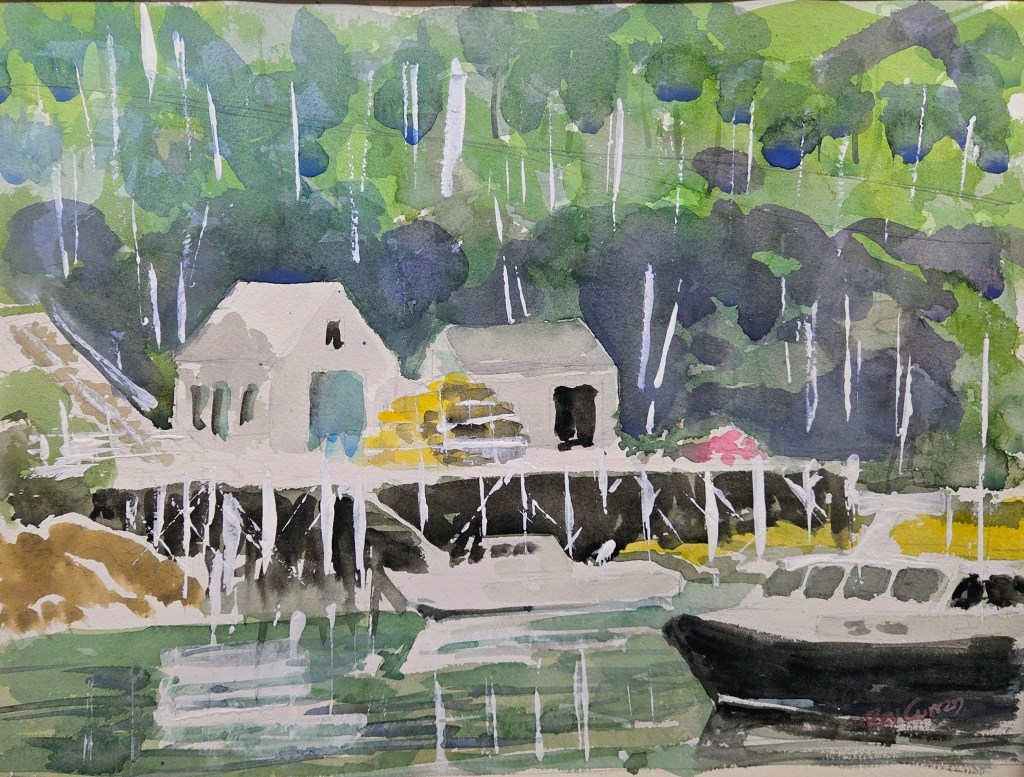
    “New Harbor,” one of the Maine paintings, is the most recent work in the show and the most radical, with its simplification of forms: the shapes of the dock, with its piers and row of sheds, and the two boats are defined as negative shapes carved out from the surrounding green and gray areas, exposing the white paper. Streaks of white, also the exposed paper, activate the composition. One has a palpable sense of glimpsing the shore and boats through pelting rain, while the touches of brown, black, blue, yellow, and red adjacent to the dock, alluding to objects and architectural details, add a subtle rhythm.

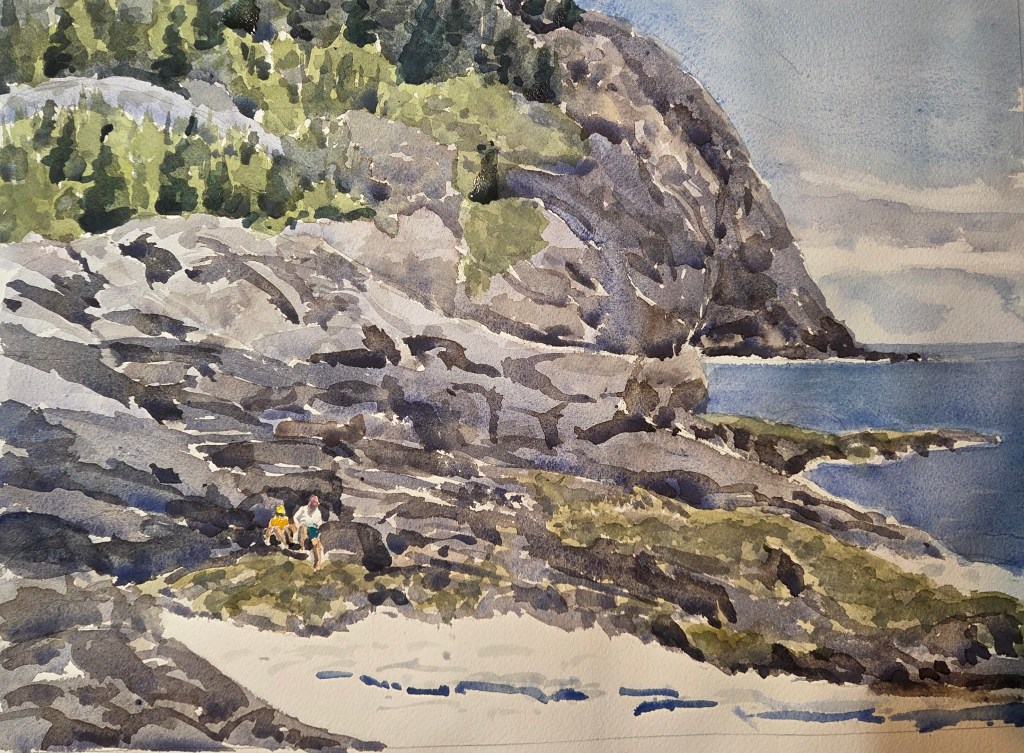
    In contrast, “Monhegan Island” is monumental: the cliff extends beyond the top of the paper, which emphasizes its massiveness. Curran skillfully suggests the movement of the stones in space by varying the shapes and contrasts of various shades of gray, conveying the landform as it protrudes into the foreground and extends back into space, connecting the beach at our feet to the cliff’s silhouetted curve descending into the water in the distance. As in “Kingston Point,” the two seated figures at lower left are a human note that by extension enable us to inhabit the scene.

    Curran’s connection to the places he paints isn’t just aesthetic; it’s also tied to history and social identity. His paintings along the Hudson were shown previously at the Kingston’s Hudson River Maritime Museum, in a kind of visual diary of the sites visiting by Hudson in his journey up the river in 1609. “People don’t have a chance to see the Hudson River at all, other than from a distance,” Curran said. “They’re horrified that I kayak on the Hudson.” It bears mentioning that the numerous parks established by Scenic Hudson in the last 30 years have helped bring the public closer, an accomplishment in which Curran played a role: In his previous career as senior planner at Scenic Hudson, he proposed adding a large park to the plan for a massive housing development along the river in a former industrial site in Kingston. When the development fell through, Scenic Hudson purchased the 500-acre site, which subsequently was acquired by the state and is now the Sojourner Truth State Park. 

    After retiring from Scenic Hudson in 2009, Curran had more time to paint in his studio at Kingston’s Shirt Factory and also devoted himself to the local arts community, cofounding the city’s Midtown Arts District. Today he paints from his home in Olivebridge. He says he’s been on a quest to move away from the precision of his earlier paintings, ”to capture the mood and qualities of the assemblage,” as he puts it, rather than do a realistic rendition, though strong drawing underpins his compositions. He uses photographic references, sometimes several for a single piece, but never copies them literally.

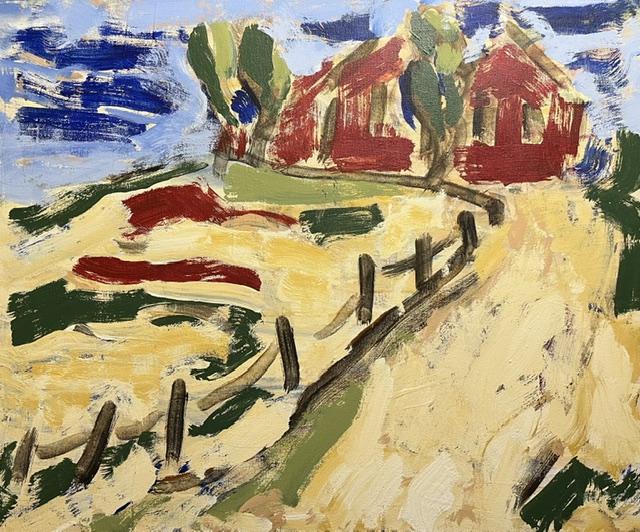
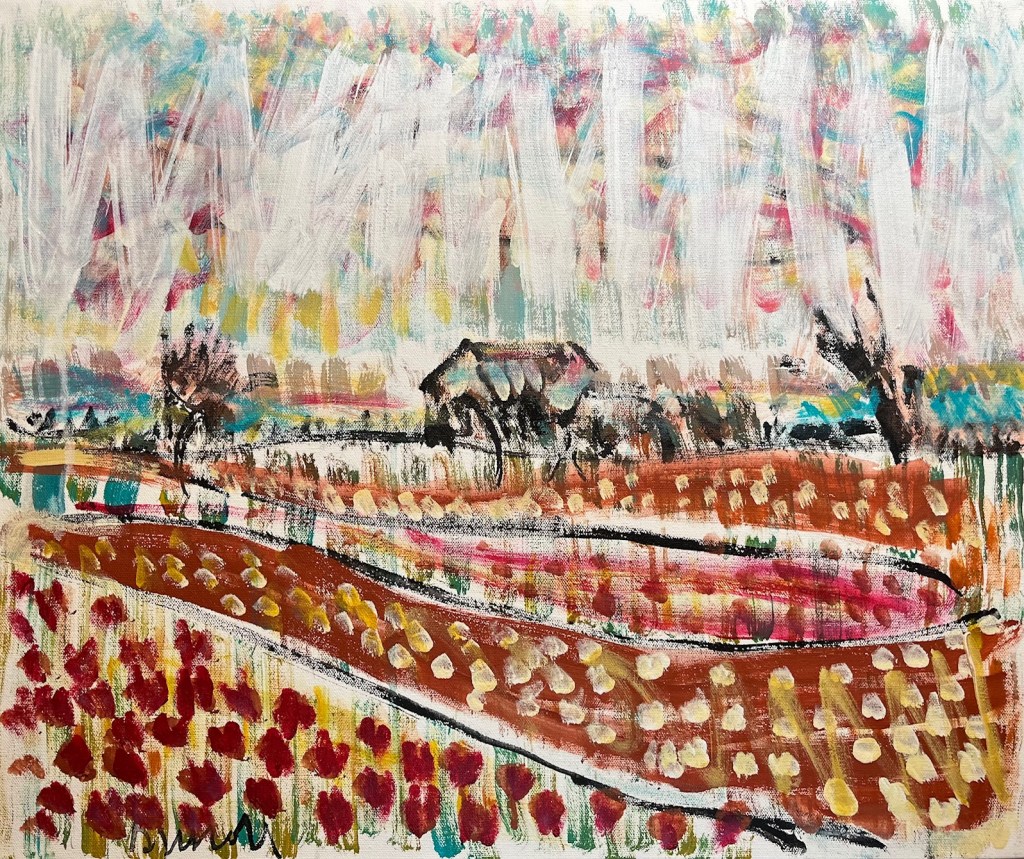
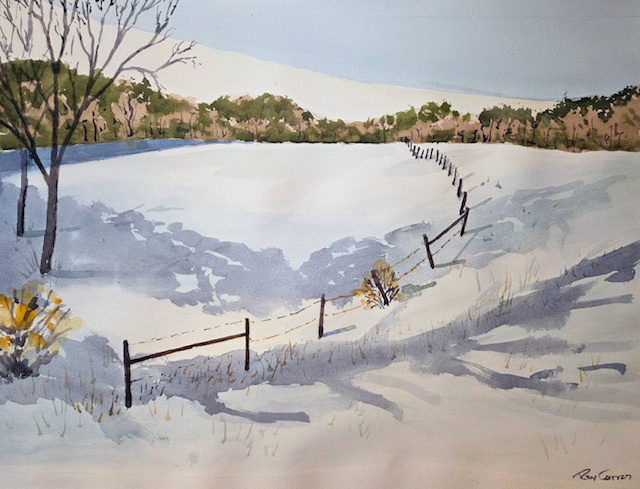
    While he’s known for his landscapes, he also has painted urban scenes as well as figures, two of which were shown at Longyear last month (the nude figures were painted decades ago at life drawing sessions at Spring Street Studio, in Manhattan).  Of late he has been experimenting, resulting in “A Line in Winter,”

    which was also included in last month’s members’ show.  It depicts a field in winter; gestural strokes, akin to Zen ink paintings in their economy, describe a receding fence, which directs the eye to a forested ridge in the background. An expansive sense of space and light are conveyed with the most minimal means, a tribute to Curran’s skill and vision.

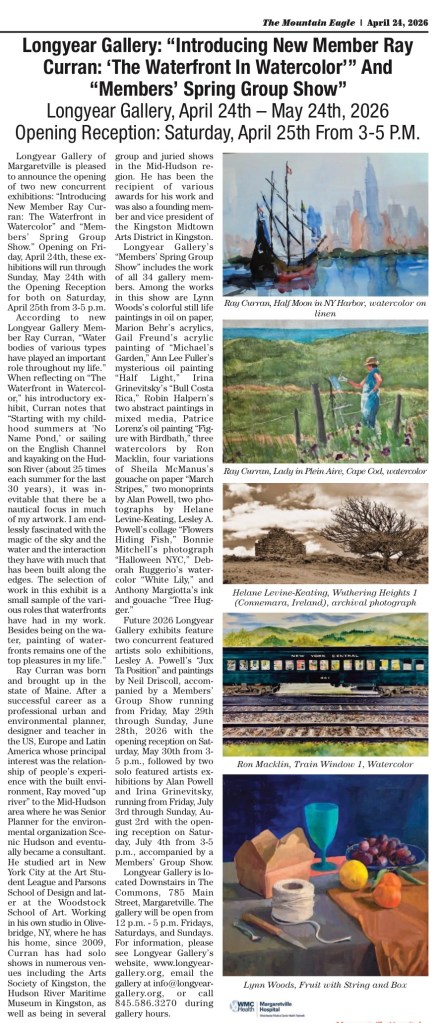
  • Longyear Gallery of Margaretville is pleased to announce the opening of two new concurrent exhibitions: “Introducing New Member Ray Curran: The Waterfront in Watercolor” and “Members’ Spring Group Show.”

    Opening on Friday, April 24th, these exhibitions will run through Sunday, May 24th
    Opening Reception for both on Saturday, April 25th from 3-5 p.m. 

    “INTRODUCING NEW MEMBER RAY CURRAN: ‘THE WATERFRONT IN WATERCOLOR’” AND “MEMBERS’ SPRING GROUP SHOW” 

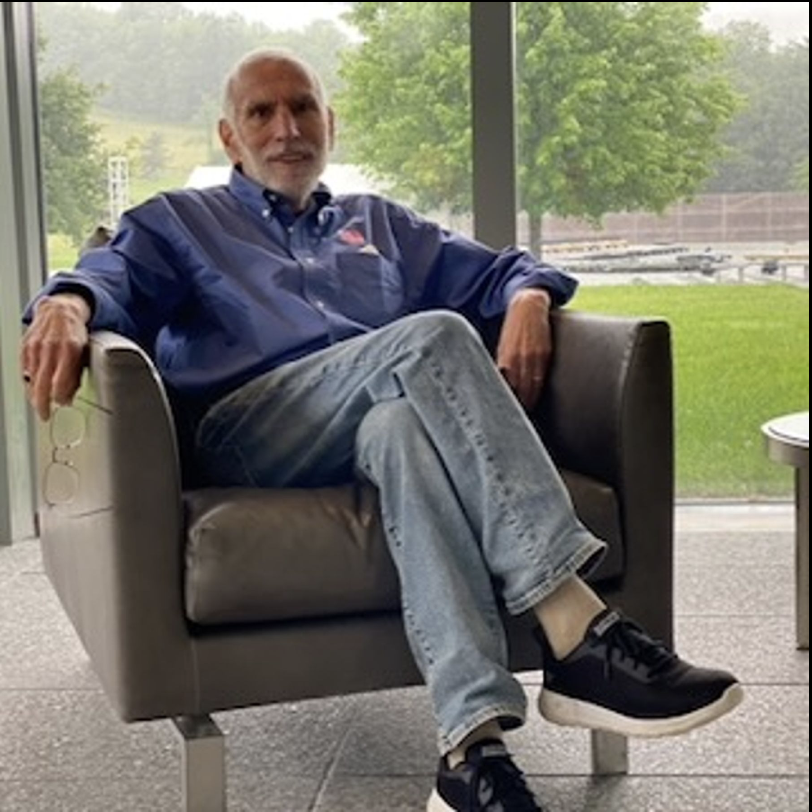
     According to new Longyear Gallery Member Ray Curran, “Water bodies of various types have played an important role throughout my life.” When reflecting on “The Waterfront in Watercolor,” his introductory exhibit, Curran notes that “Starting with my childhood summers at ‘No Name Pond,’ or sailing on the English Channel and kayaking on the Hudson River (about 25 times each summer for the last 30 years), it was inevitable that there be a nautical focus in much of my artwork. I am endlessly fascinated with the magic of the sky and the water and the interaction they have with much that has been built along the edges. The selection of work in this exhibit is a small sample of the various roles that waterfronts have had in my work. Besides being on the water, painting of waterfronts remains one of the top pleasures in my life.”

    Ray Curran was born and brought up in the state of Maine. After a successful career as a professional urban and environmental planner, designer and teacher in the US, Europe and Latin America whose principal interest was the relationship of people’s experience with the built environment, Ray moved “up river” to the Mid-Hudson area where he was Senior Planner for the environmental organization Scenic Hudson and eventually became a consultant. He studied art in New York City at the Art Student League and Parsons School of Design and later at the Woodstock School of Art. Working in his own studio in Olivebridge, NY, where he has his home, since 2009, Curran has had solo shows in numerous venues including the Arts Society of Kingston, the Hudson River Maritime Museum in Kingston, as well as being in several group and juried shows in the Mid-Hudson region. He has been the recipient of various awards for his work and was also a founding member and vice president of the Kingston Midtown Arts District in Kingston.

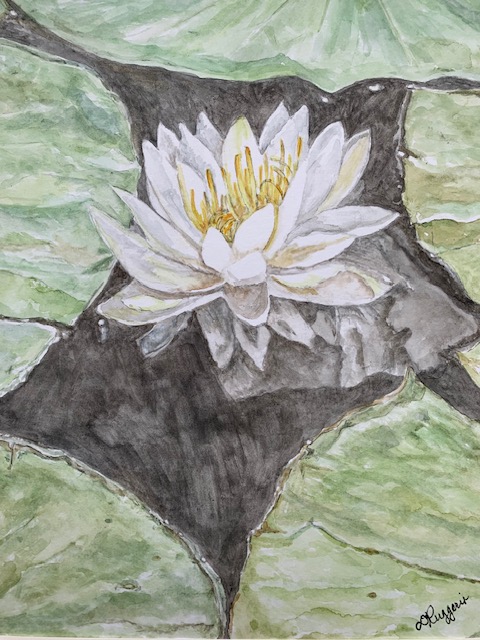
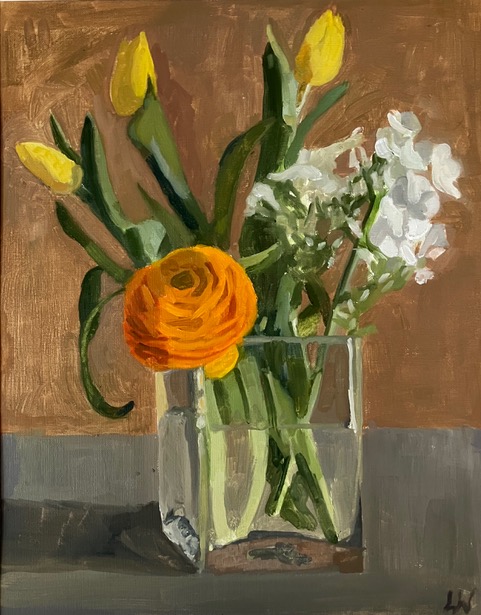
    Longyear Gallery’s “Members’ Spring Group Show” includes the work of all 34 gallery members. Among the works in this show are Lynn Woods’s colorful still life paintings in oil on paper, Marion Behr’s acrylics, Gail Freund’s acrylic painting of “Michael’s Garden,” Ann Lee Fuller’s mysterious oil painting “Half Light,” Irina Grinevitsky’s “Bull Costa Rica,” Robin Halpern’s two abstract paintings in mixed media, Patrice Lorenz’s oil painting “Figure with Birdbath,” three watercolors by Ron Macklin, four variations of Sheila McManus’s gouache on paper “March Stripes,”  two monoprints by Alan Powell, two photographs by Helane Levine-Keating, Lesley A. Powell’s collage “Flowers Hiding Fish,” Bonnie Mitchell’s photograph “Halloween NYC,” Deborah Ruggerio’s watercolor “White Lily,” and Anthony Margiotta’s ink and gouache “Tree Hugger.”

    Future 2026 Longyear Gallery exhibits feature two concurrent featured artists solo exhibitions, Lesley A. Powell’s “Jux Ta Position” and paintings by Neil Driscoll, accompanied by a Members’ Group Show running from Friday, May 29th through Sunday, June 28th, 2026 with the opening reception on Saturday, May 30th from 3-5 p.m., followed by two solo featured artists exhibitions by Alan Powell and Irina Grinevitsky, running from Friday, July 3rd through Sunday, August 2rd with the opening reception on Saturday, July 4th from 3-5 p.m., accompanied by a Members’ Group Show. 

    Longyear Gallery is located Downstairs in The Commons, 785 Main Street, Margaretville. The gallery will be open from 12 p.m. – 5 p.m. Fridays, Saturdays, and Sundays. For information, please see Longyear Gallery’s website, www.longyeargallery.org, email the gallery at info@longyeargallery.org, or call 845.586.3270 during gallery hours. 

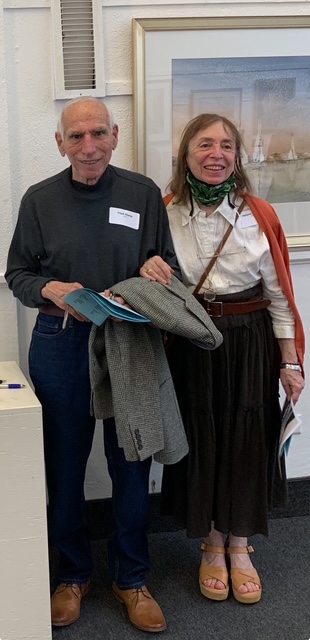
  • We recently lost our beloved retired former member Frank Manzo, who passed away on March 31, 2026, at the age of 85. Born on October 23, 1940, Frank was a resident of Brooklyn and Roxbury New York. 


    An architect and photographer, Frank, along with his painter and printmaker wife Helene became founding members of Longyear Gallery,  nearly 20 years ago. Frank Manzo has also exhibited his photographs at the Roxbury Arts Group, the Salmagundi Club and at the Catskill Center’s Erpf Gallery.

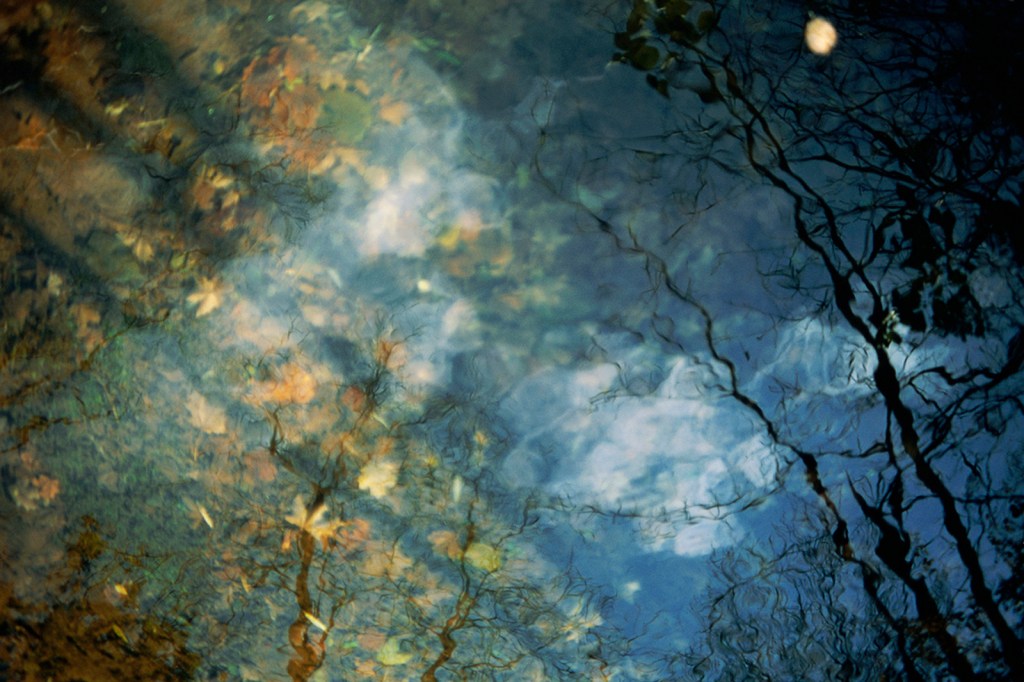
    “Since photographs strive to capture the visual effect of the temporal changes in light that lend an atmospheric sense to a two dimensional image and the quality and changes of light inform the image, assuring that each image is unique, the challenge is to create both an interesting composition with painterly qualities that resent to the viewer more than one interpretation, thus allowing one to see different aspects each time it is viewed.”

    Our hearts go out to his wife Helene and their family. We will miss Frank and remember him always.

  • by Lynn Woods

    “DRAWING – Take a Line for a Walk,” the special exhibit on view through April 19 featuring the work of 20 Longyear members, inspired many of the participating artists to take a fresh approach.

    For example, Sara Stone literally “took a line for a walk” by starting her small, 9×9” square watercolor pieces with the application of a single color, letting her brush meander across the paper in a pleasing configuration, followed by another swath of adjacent color and then another, building up the composition. “I could get cool things happening with the transitions,” she says, that is, in the switch from one color to another, from dark to light, pale to saturated, and even within the application of a single color as she lightened or darkened the tone.  Separating each undulating shape are thin white lines, consisting of the unpainted underlying paper, which gives the pieces a mosaic-like quality.  Varying from compositions consisting of lighter, floral-like colors to dramatic contrasts of rich, warm hues against dark blues and purples, the pieces are magical, their glowing chromatics perpetually in motion, suggesting the latent forces of nature.

    Line is similarly conceived as color forms in Sheila McManus’s series of nine square paintings, which are shown clustered together, as sections of a single painting. Crescents and swirling strips of muted greens, yellows, blues, russets, oranges and lavender overlap in a dense, tangled field emerging from a dark, mysterious ground. The color harmonies are exquisite and the brushwork crisp yet spontaneous.

    Ron Macklin also took the theme of the exhibit as a fresh directive, in this case to simplify his palette to two tones, which give his paintings a graphic quality. “Notan”—a Japanese term referring to a design in lights and darks—”has the quality of a line drawing,” he says. Two of his paintings are of figures in an urban street scene, lent a grittiness by the stark contrasts of black and white. The third painting, even more of a departure from his hyper-realistic watercolors, is a mysterious image, until, after some scrutiny, one makes out the keys and typing guide of a vintage typewriter. Working from a photographic image in which the distorted lens exaggerated the curving and elongation of the keys, which he then tightly cropped, Ron transformed the object into a soaring stadium-like space, with the lettered keys dramatically enlarged, attenuated and falling away along the bottom edge. His use of masking fluid served to blur and smear some of the darked edges, further abstracting the image, in what is a truly original, masterful piece.

    To the casual viewer, Marion Behr’s three drawings, two in pen and ink and the third done with a rapidograph, most closely adhere to the theme. Each of the images appears to be composed of a single, black, continuous line, and they clearly are influenced by the artist’s former practice of working in wire, which she used to create armatures for her sculptures. (She notes that there are some broken lines in the pieces, although “the thought process is taking a few lines on a walk.”) “Drawing has been a major part of my practice,” she says, noting that she made etchings while employed at Parsons and used to sketch people on the train while commuting from her home in New Jersey to the city. “AI” reflects “on the machine taking over people,” while “Vote” evolved from the many drawings Marion made while attending the Fourth of July fair in Margaretteville. The drawings have a wonderful, whimsical quality, and the large protruding hands in “AI” are the Picasso-like grace notes of the two oddly conflated figures, which also suggest the automatic drawings of the Surrealists and Dadaists.

    Drawing is also critical to the painting practice of Wayne Morris; he says he usually makes sketches before beginning a painting. The selection of his drawings in the show documents his range—from a rough charcoal sketch and pencil drawing of trees to a beautifully detailed view of a forested hill, in which each tree wears an aureole of light, to a pair of pencil portraits, in which the sensitively rendered tones of the heads and faces, emerging out of a lightly sketched body, convey the specific character of the sitter.  Victoria Scott’s drawings, varying in size and medium, including ink and compressed charcoal, document the woods of the Catskills juxtaposed with a monument in honor of working people at a historic site in her native Philadelphia. 

    In his video entitled “Largo Florida Soundscape,” Alan Powell interpreted a line as a dancing physical string upon which hangs a flat round translucent disc nudged by the wind.  The dangling disc is actually the bottom part of a windchime, which he videotaped for seven minutes on a visit to Florida. The ring of the chime, which one hears through headphones, prompts the moving image and becomes increasingly distorted thanks to Powell’s use of electronic image processing. The disc spins upside down and flashes various colors, the blues suggesting the silhouette of planet earth, the fiery oranges and pinks the sun, or perhaps a party balloon. The recorded soundscape is visceral, complete with sirens, and its distortions and the ensuing chaos of the image take on cosmic overtones. It’s a moving experience, in which a mundane moving object somehow conveys the vulnerabilities and trauma of our times.

    Other delights of the show are Deborah Ruggerio’s intricate, delicately toned ink drawings of the local landscape; Richard Mills’ graphite and pastel depictions of Lexington Avenue apartment brick buildings, with their rhythmic array of windows; Anthony Margiotta’s fanciful ink and gouache drawings (a personal favorite is the Steinberg-like “Tilling,” in which the lines describing the sweeping expanse of a field are shown emerging from a pen held in the grip of an elephant’s tail; a clown sits astride the beast in the foreground); the oilstick and acrylic paintings of sea, tree and leaf of Michelle Spark, in which lines serve as the life force; and the India ink paintings of Gail Freund, which in their simplicity and spontaneity of touch convey the freshness of the woods in snow and the tumbling blossoms of a plant. Other works, too numerous to describe here, are by Lariar, Mary McFerran, Gerda van Leeuwen, Hedi Kyle, Temma Bell, Neil Driscoll, and Bonnie Mitchell.


    “Drawing a line can be interpreted in many ways. I chose to select a stack of cardboards, various inks, paints, and instruments such as brushes, and pencils, and pens that would create lines of different character going in all directions. I followed my intuition as how to begin, where to use color, when to stop.” Hedi Kyle

  • TWO NEW EXHIBITIONS:

    “DRAWING – TAKE A LINE FOR A WALK” and “MEMBERS’ GROUP EXHIBITION”

    LONGYEAR GALLERY, MARCH 20th – APRIL 19th, 2026
    OPENING RECEPTION: SATURDAY, MARCH 21st from 3-5 p.m.

    Longyear Gallery of Margaretville is pleased to announce the opening of two new concurrent exhibitions: “DRAWING – Take A Line for a Walk” and “Members’ Group Exhibition.” Opening on Friday, March 20th, these exhibitions will run through Sunday, April 19th with the Opening Reception for both on Saturday, March 21st from 3-5 p.m.

    Longyear Gallery’s new exhibition “DRAWING – Take a Line for a Walk” includes works in a series informed by a special theme chosen annually by Longyear members. This year’s exhibit includes Marion Behr’s black and white drawings using a rapidograph or a Farber pen; Temma Bell’s five black and white self-portraits using ink on paper; Neil Driscoll’s acrylic on canvas color painting; Gail Freund’s India ink on paper black and white flowers and landscapes; Ron Macklin’s black and white city watercolors; Anthony Margiotta’s ink and gouache along with black and white ink drawings; Sheila McManus’s six abstract ”February Lines” using gouache on paper; Wayne Morris’s “Bovina Mountain View,” using graphite on Strathmore; Alan Powell’s color details from video installations; Deborah Ruggerio’s black and white ink on paper drawings of local landscapes; Victoria Scott’s black and white drawing using ink on Arches watercolor paper; Michelle Spark’s acrylic and oil on paper dreamy drawings; and Sara Stone’s color drawings using watercolor on paper along with the works in series of member artists Hedi Kyle, Linda Lariar, Mary McFarren, Richard Kirk Mills, Bonnie Mitchell, and Gerda van Leeuwen.

                Longyear Gallery’s newest spring “Members’ Group Exhibition” includes a Robert Axelrod black and white landscape etching, Joanne Barham’s multimedia art on canvas, a Robert Buckwalter oil painting, Marcia Clark’s cityscapes in oil, Ray Curran’s watercolors on linen, an Ann Lee Fuller oil painting, Irina Grinevitsky’s art, Robin Halpern’s two portraits in mixed media, Margaret Leveson’s art, two black and white cloudscape archival photographs by Helane Levine-Keating, Patrice Lorenz’s painting using Fasche paint on paper, Lesley A. Powell’s paintings using encaustic or oil, Ros Welchman’s ceramics, and two still life oil paintings by Lynn Woods.

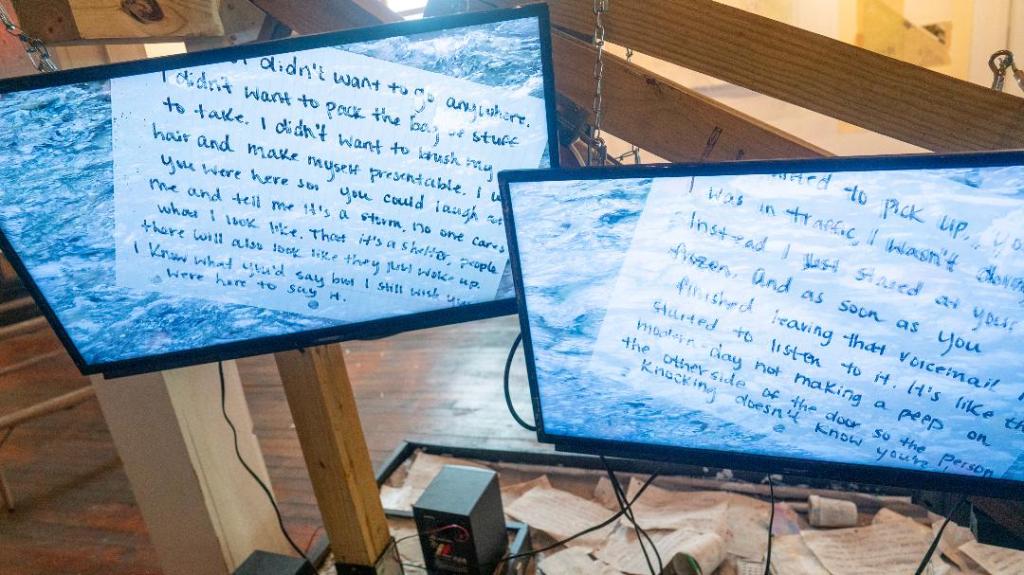
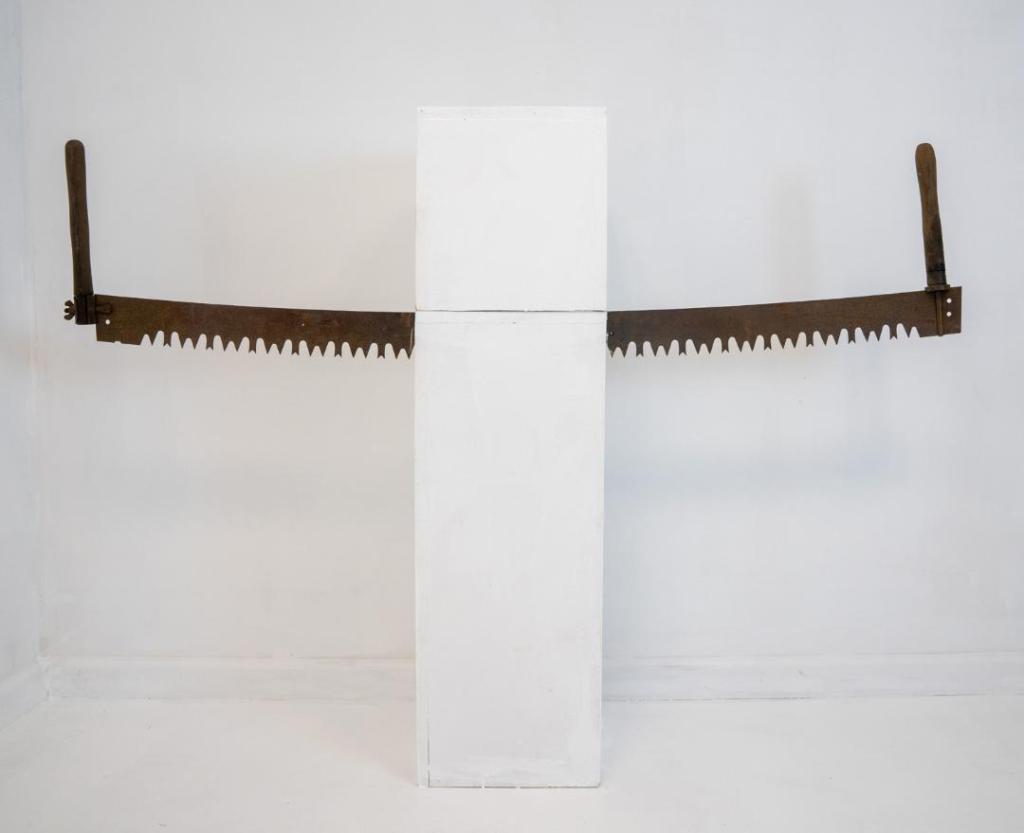
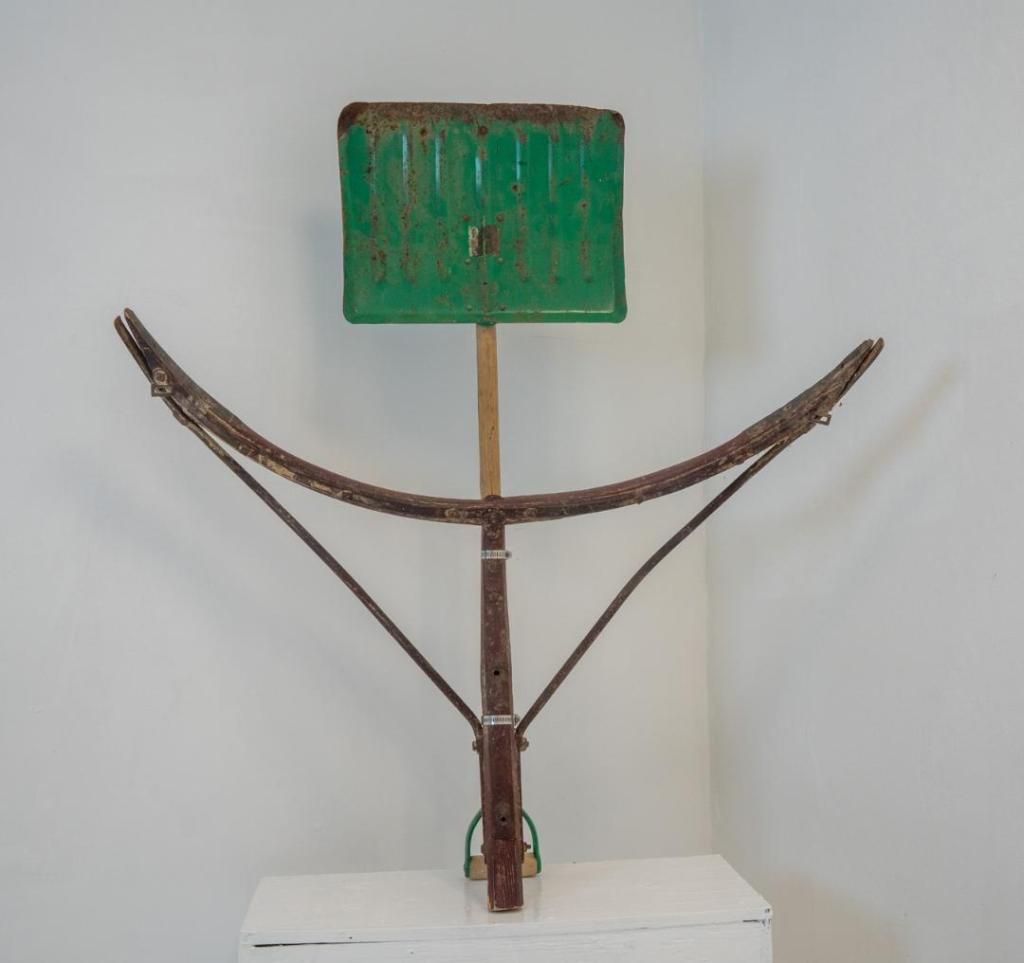
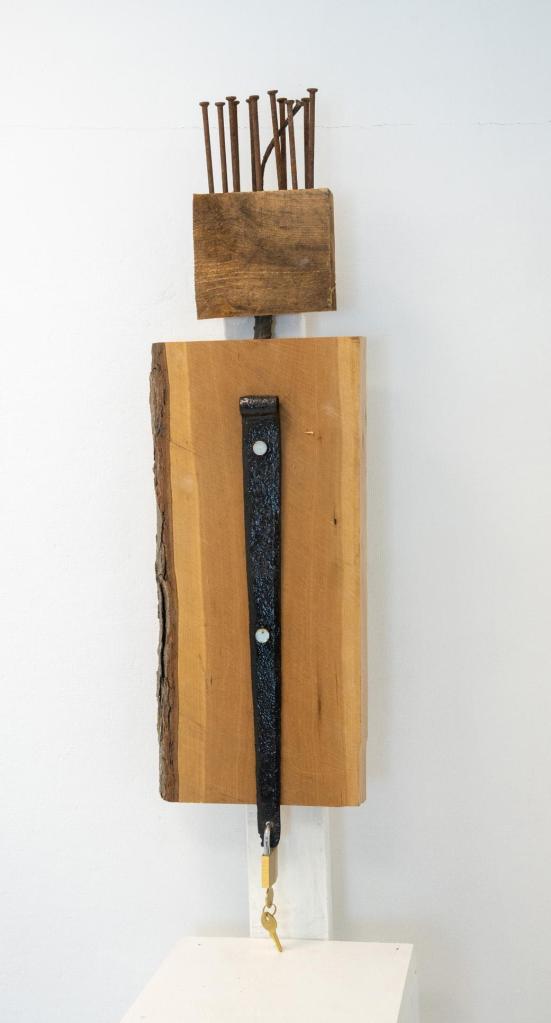
                “Rust Cabinet,” the gallery’s newest Cabinet of Curiosities, curated by Longyear Gallery Members Hedi Kyle, Gerda van Leeuwen, and Mary McFerran has been installed in time for the opening of these two new exhibitions. It is on view just outside the gallery in the interior display in the Commons hallway.

    Future 2026 Longyear Gallery exhibits feature a Members’ Group Show running from Friday, April 24th through Sunday, May 24th, 2026 with the opening reception on Saturday, April 25th from 3-5 p.m., followed by two solo featured artists exhibitions by Neil Driscoll and Lesley A. Powell, running from Friday, May 29th-Sunday, June 28th with the opening reception on Saturday, May 30th from 3-5 p.m., accompanied by a Members’ Group Show.

    Longyear Gallery is located Downstairs in The Commons, 785 Main Street, Margaretville. The gallery will be open from 11 a.m. – 4 p.m. Fridays, Saturdays, and Sundays. For information, please see Longyear Gallery’s website, email the gallery at info@longyeargallery.org, or call 845.586.3270 during gallery hours.
  • by Lynn Woods

    Early Gallery at the Commons
    Longyear Gallery on 2nd Floor in the Commons

    Galleries tend to come and go, which makes the legacy of Longyear Gallery rather extraordinary:  Its sign has graced Margaretville’s Main Street for nearly 20 years, since 2007. The gallery is located in a rambling wood building that had originally housed a department store back in the 1920s, or maybe even earlier, and it was the building, known as the Commons, that first captured the fancy of Brooklyn-based architect Frank Manzo and his wife, Laini Manzo, an artist.  The couple owned a weekend house in nearby Roxbury, which had familiarized them with the area. They purchased the Commons after the owners had tried unsuccessfully to auction it off, renovated the space, and two years later opened the gallery on the second floor.

    Helene Manzo

    Laini, who is primarily a printmaker, was a member of Blue Mountain Gallery, a co-op gallery then located in Soho (it’s now based in Chelsea), which served as a model for the new gallery. She had joined Blue Mountain at its beginnings in the early 1970s. While raising six children in Park Slope, which was then an affordable neighborhood, she made her prints out of a studio she rented over a garage, paying for the rent by providing art lessons to children after school. “I didn’t have a press for a long time and asked everyone I knew if I could use their press,” she said. When her children were in college, she attended the Vermont Studio Center and she and Frank bought their house in the Catskills.

    One of the first people she contacted upon starting the co-op gallery in the Commons was fellow Blue Mountain Gallery member Meg Leveson, a painter and close friend who also lived in Park Slope and was a parent. Meg had worked as a curator in a gallery at Vancouver before moving to New York, had earned an MFA from Brooklyn College, met her husband, David Leveson, a geology professor at Brooklyn College, and traveled for a year on his sabbatical. In 1977, the couple had bought a historic property in Arkville, which was part of a former art colony and included two studios. To locate members for the co-op, she and Laini “kept looking at new work and picked up some good painters—principally doing the same things we do now,” she said. “There were definitely a lot of artists living in the area when we founded the gallery, much as there are now.” One resource was a book listing artists based in Delaware County, which Laini perused, contacting those based in Margaretville.

    Ann Lee Fuller

    Another early member was Ann Lee Fuller, who had been showing at Roxbury Arts when she got a call from Meg inviting her to join the new gallery. “Known for my big skies,” as she put it, Ann Lee is a painter who with her husband, Stuart Fuller, then owned a loft in Chelsea and a weekend place near Denver. Initially, when they acquired their 10-acre rural property many decades ago, Stuart, who worked for Phillip Morris, and Ann Lee, who had a graphic design business, “wanted to escape and recharge,” although over the years they connected with the community upstate and “started feeling at home,” Ann Lee said.

    2008
    Longyear gathering at Meg and David Leveson’s home c 2008.

    “At our first meeting, whoever showed up and paid their $200 got in,” she noted. Nat Thomas was the first director, followed by Phyllis Horowitz, who took on the business management, who in turn was followed by Gerda van Leeuwen, and then Meg’s husband, David Leveson (who was followed by current director, Wayne Morris). In the early days of Longyear, the members were “an intimate group and we were really happy about selling each other’s work,” Ann Lee recalled. “We capped our membership at 25 people, and it became difficult to get in.”

    Meg, who as noted had a curatorial background, hung a lot of the shows with first director Nat and continued to do so after he dropped out. David showed his geological photographs at Longyear, and Meg did all the scheduling until David’s passing in 2018. Laini also helped hang the shows.

    Longyear Gallery was popular from the beginning. After the owner of the Homegoods store on the first floor of the building sold her business and moved away, architect Frank redesigned and reconfigured the space, including the backroom extension, which had originally been part of the kitchen store, and the gallery moved downstairs. “We had to renovate on our own dime. Frank managed the project and lent us the money to do it,” said Ann Lee. The only negligible feature was the lack of sufficient heating (which is provided by a noisy electrical heater installed on the gallery ceiling). Revamping the heating system would have cost a fortune for such an old building and was beyond the couple’s budget.

    Laini and Frank sold the building, which needed a new roof, four years ago. The terms of the sale to the new owner included language about keeping the rent reasonable, Laini said. Today, the cultural scene in Margaretville “has gotten a lot more impressive,” with several galleries and a gourmet grocery store, Ann Lee noted. “In the early days of the gallery we had classes, partly because a lot of members were art teachers. We used to publish articles in the Catskill Mountain News, which were written by Phyllis. We’re working harder now to advertise.”

    Due to Frank’s health issues, Laini is no longer a member and is mostly based in Brooklyn. Meg is also spending most of her time in her house in Brooklyn, which she shares with her daughter and grandchildren. In 2011, the Fullers sold their loft in the city and bought a house in Vero Beach, Florida. Until last year, they also owned a gallery in Vero Beach, The Other Half Gallery, exclusively showing the work of friend artists from the Catskills, including Longyear, of course. Longyear currently has 34 artists and, as we all know, is still going strong.

  • LONGYEAR GALLERY, FEBRUARY 13th – MARCH 15th, 2026
    OPENING RECEPTION: SATURDAY, FEBRUARY 14th from 3-5 p.m.

    Longyear Gallery of Margaretville is pleased to announce the opening of two new concurrent exhibitions: “Mary McFerran’s ‘Storm Dresses’” and “Members’ Late Winter Group Exhibition.” Opening on Friday, February 13th, these exhibitions will run through Sunday, March 15th with the Opening Reception for both on Saturday, February 14th from 3-5 p.m.

    Fire Skirt

    New Longyear Gallery member Mary McFerran challenges conventional notions of sewing and drawing by creating artwork from cloth and paper to tell stories about women, climate change, history and personal memoir. Her style heralds expressive color, collage, and mark-making, alternating stitches with pencil and paint lines. McFerran prefers to incorporate up-cycled fabric remnants and discarded artwork for her hybrid constructions. “Storm Dresses,” her introductory exhibition at Longyear, takes its title from her artwork’s connection to the “Floods, fires, droughts, and hurricanes that have become familiar events as our planet endures the ongoing effects of climate change,” the artist notes. “Storm Dresses” invites viewers to confront these forces of nature on a personal level. Using clothing as her canvas, McFerran draws on its intimate connection to human experience. For McFerran, “Clothing reflects identity, geography, and values across cultures—it defines who we are and where we come from. Whether for comfort, status, or self-expression, what we wear becomes an extension of ourselves.” In “Storm Dresses,” McFerran playfully merges the worlds of fashion and extreme weather. “Fire Blouse and Skirt” shimmer in quilted reds, yellows, and oranges beneath a veil of black netting that evokes rising smoke. “Drought Dress” captures the parched textures and fissures of sun-scorched earth. “Hurricane Dress” combines mismatched, muddied garments to mirror chaos and destruction, while “Flood Dress” hints at survival through the suggestion of a floating device.

    Mary McFerran has degrees in fashion, art education, printmaking, expanded arts, and educational technology. She has shown her work in various exhibitions in NYC and the Hudson Valley, most recently at such Catskill Mountains venues as Bushel Collective, Delhi; Roxbury Arts Group, Roxbury; Pine Hill Community Center, Pine Hill; Art Up, Margaretville; Café Marguerite, Margaretville, and the Olive Free Library, Olive.

    Longyear Gallery’s “Members’ Late Winter Group Exhibition” offers an opportunity to view a variety of works in different media by Longyear’s current 34 members. The engaging work of member artists varies in style and vision representing a large range of media, including oil paintings, pastels, watercolor, mixed media, photographs, collages, gouaches, pencil drawings, ceramics, acrylics, and monotypes. Member artists include Robert Axelrod, Joanne Barham, Marion Behr, Temma Bell, Robert Buckwalter, Marcia Clark, Ray Curran, Neil Driscoll, Gail Freund, Ann Lee Fuller, Irina Grinevitsky, Robin Halpern, Louise Kalin, Hedi Kyle, Linda Lariar, Margaret Leveson, Helane Levine-Keating, Patrice Lorenz, Ron Macklin, Anthony Margiotta, Mary McFerran, Sheila McManus, Richard Kirk Mills, Bonnie Mitchell, Wayne Morris, Alan Powell, Lesley A. Powell, Deborah Ruggerio, Victoria Scott, Michelle Spark, Sara Stone, Gerda van Leeuwen, Rosamond Welchman, and Lynn Woods. “Cabinet of Curiosities,” “a miniature gallery” curated by Longyear members Hedi Kyle and Louise Kalin, will also be on display in the hallway just outside the gallery.

    Future early spring 2026 Longyear Gallery exhibits include a Special Exhibition: “DRAWING – Take a Line for a Walk” accompanied by a Members’ Group Show of Longyear members not participating in the Special Exhibition. These two concurrent exhibitions will open on Friday, March 20th and run through Sunday, April 19th, with the opening reception on Saturday, March 21st from 3-5 p.m.

    Longyear Gallery is located Downstairs in The Commons, 785 Main Street, Margaretville. The gallery will be open from 11 a.m. – 4 p.m. Fridays, Saturdays, and Sundays. For information, please see Longyear Gallery’s website, email the gallery at info@longyeargallery.org, or call 845.586.3270 during gallery hours.
  • By Lynn Woods

    Traces of Rust, Collagraph on handmade paper
    32” x 26”

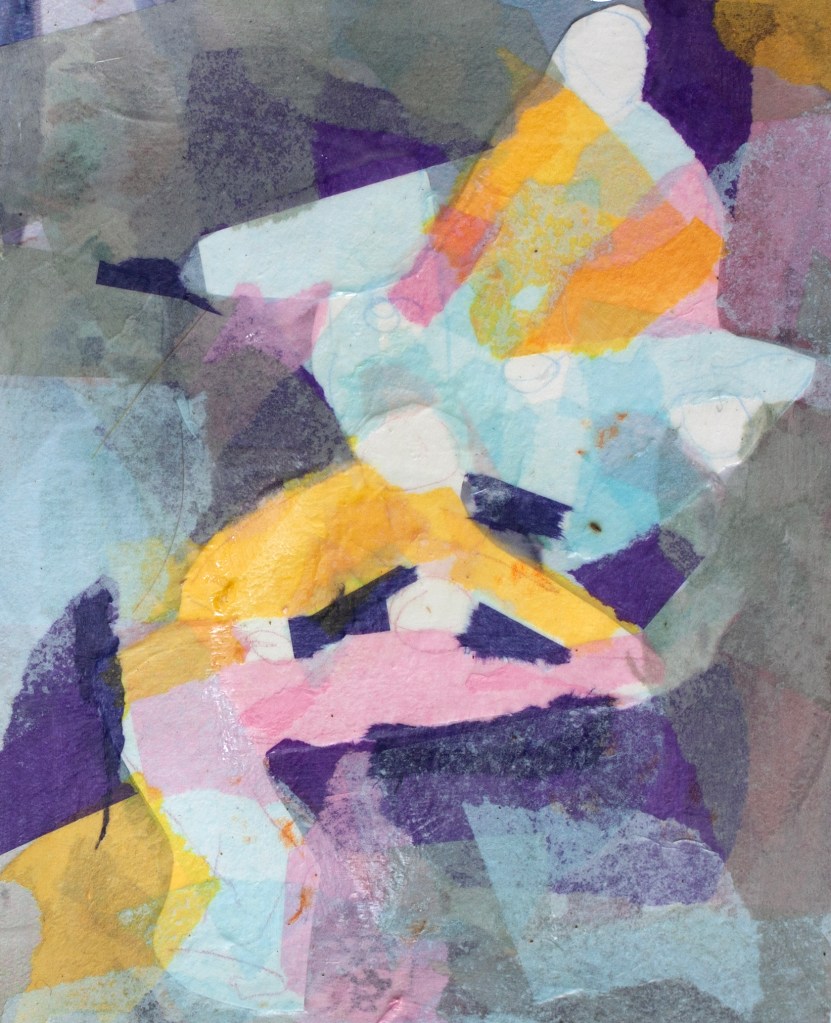
    Louise Kalin’s solo show of prints at Longyear Gallery, entitled “First Impressions, Second Thoughts,” held last November, featured a series of large prints whose bark-like textures and fissures seemed evolved from nature herself. Alternately, they read as palimpsests, fragments of ancient inscriptions worn away by the forces of weather over the eons. The mysterious beauty of these pieces is a tribute to Louise’s layered technique, which literally incorporates the passage of time: printed from a single plate and varying in chroma and tone, the pieces were created nearly 40 years ago, when Louise was a member of the MacDowell Colony. The plate itself is layered, incorporating remnants of wallpaper and fabric, which the artist then sealed with polymers. The handmade paper on which they were printed “soaks up the image,” further abstracting it and letting the process dictate the result. “There’s a sense of using things that no longer had value and the power of the image, in all its variations,” Louise says. In a kind of “Second Thoughts,” she revisited some of the prints and collaged them with added layers, for instance by gluing on bits of bark.
    Red Earth
    Solar etching
    10”x12

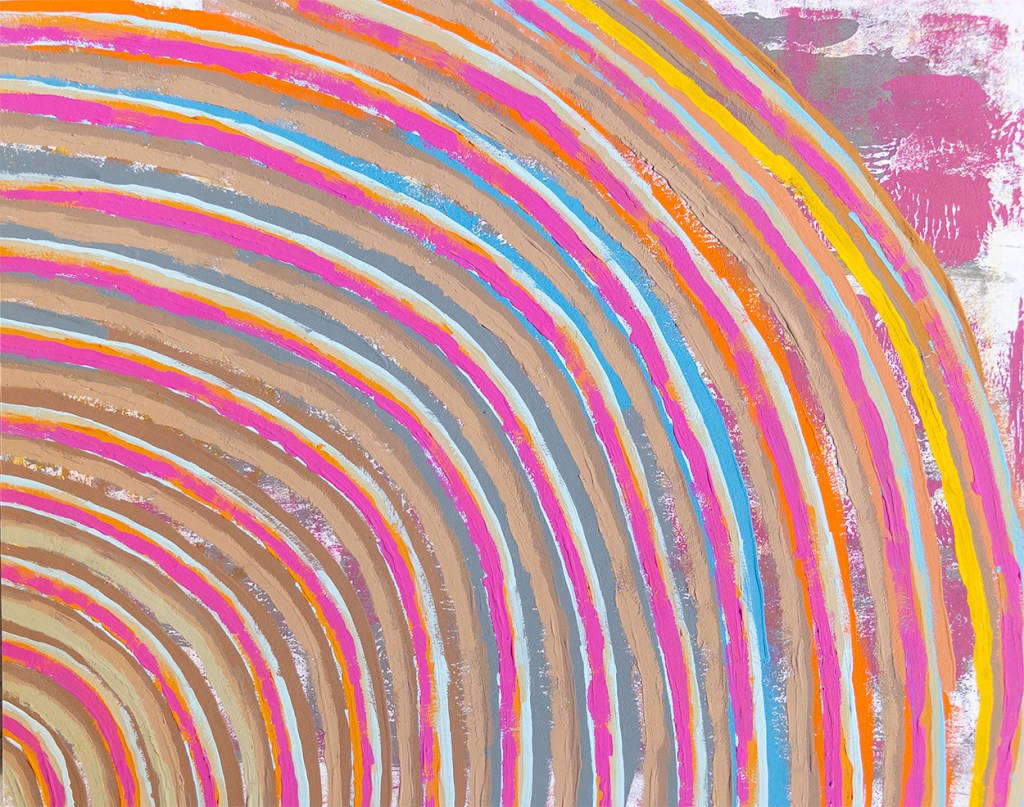
    The show also included her solar etchings, in which the metal plate is covered with a light-sensitive coating and exposed to sunlight or a black light, creating a relief. “Red Earth,” made from two such plates, suggests sky and land forms catching the last rays of the setting sun, although the scratched incisions, connoting geological formations as well as establishing the flatness of the surface, resist any literal reading of a landscape. Yet another body of work was three gorgeous “dispersion prints,” images of water and mountain ranges in which her color photographs of the landscape were printed on the wrong side of photographic paper, causing the ink to spread and be absorbed more in the manner of a monoprint. To create the images, she worked with Rhinebeck-based photographer Chad Kleitsch, who scanned and enlarged the images and printed them archivally on acid-free paper. The pieces read as bands of dark, rich color against a twilit sky, riven midway by the gleam of a lake or river, a landscape reduced to its poetic essence. “It’s a printmaking and mixed-media adventure,” she says, summing up the show.

    Louise’s penchant for experimentation harks back to her growing up in a family of artists—her father and brother were painters and her mother taught art. She won a full scholarship to the Rhode Island School of Design, where she studied drawing, printmaking, and illustration and upon graduation, married, moved to Concord, Massachusetts, and became the graphic designer for the deCordova Sculpture Park and Museum. She then moved to New Hampshire and did both exhibition work and graphic design for nonprofits, started a newspaper with three other women and, after her prints were discovered and collected by the director of the Currier Museum of Art, upon his recommendation applied and was accepted at the MacDowell Colony. That was in 1987, and it was life-changing. Afterwards she rented studio space in an old mill building in Wilton, New Hampshire, traveled to New York City to visit her MacDowell friends, and, newly divorced, moved to a carriage house on the Stanford White estate with Louis Asekoff, a poet whom she had met at MacDowell (and became her long-time husband). She ran a gallery in Stony Brook before moving with Louis in 1998 to a farmhouse outside Tivoli, where she established a studio in the barn on the property and has lived and worked ever since. (Her accomplishments, however, extended beyond the studio: from 1998 to 2004, she was the director of the Rhinebeck Chamber of Commerce).

    While living in New Hampshire she showed at MacGowan Fine Arts and says she was influenced by Josef Albers and traditional quilts, which infused her work with a sense of geometric structure and strong color harmonies. She describes “First Impressions, Second Thoughts” as a survey of her print techniques and evolving images. “My thing is trying out new processes,” Louise says. “The sweep of it all—time spent in the studio, taking workshops, discovering a new technique or imagery–has been important to me. There’s an experimental effort, yet always a consistency of integrity of materials and technique. It’s personal, but also about the creative journey.”

    www.louisekalin.com